
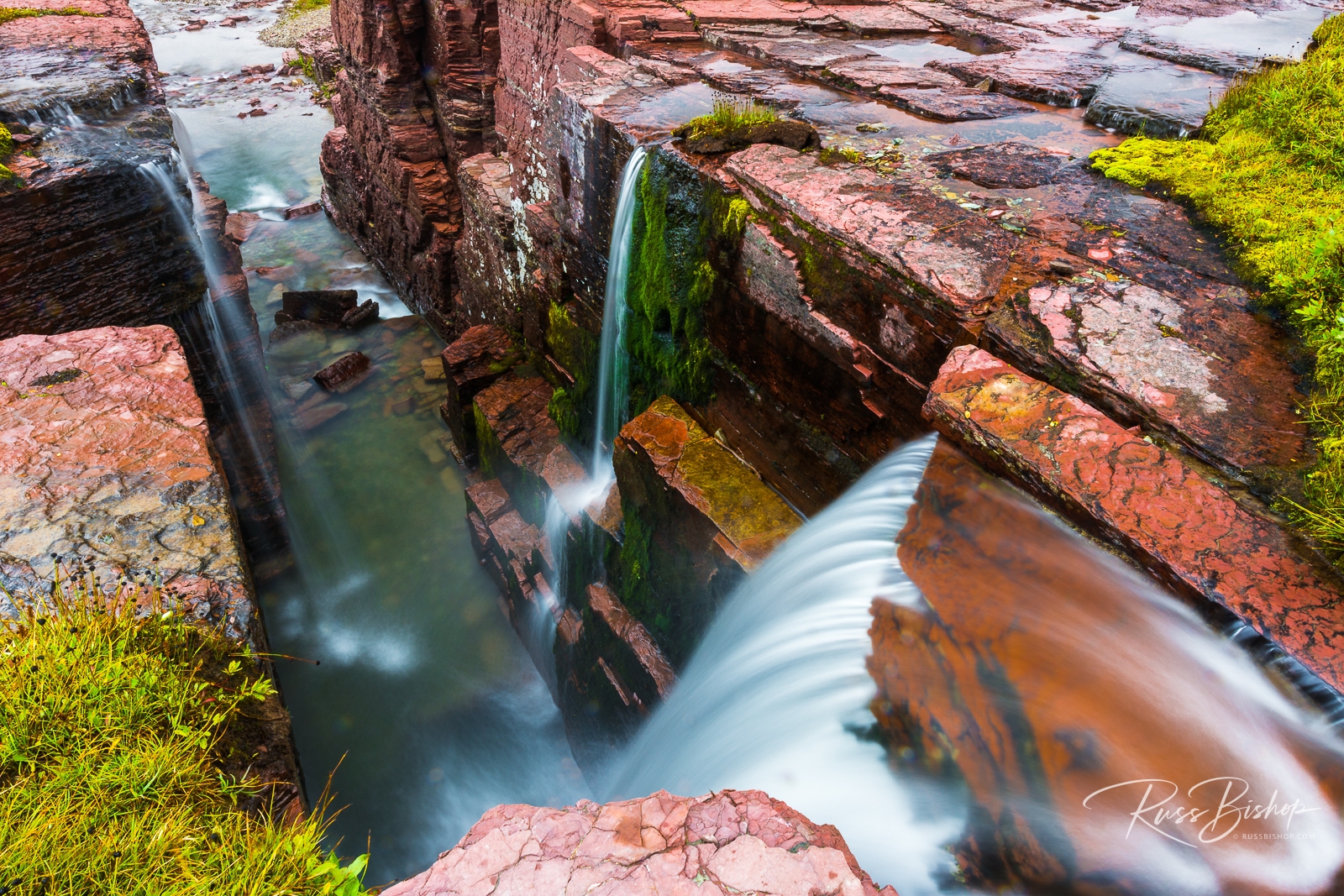
Finding Balance

Finding Balance. Triple Falls, Glacier National Park, Montana
Triple Falls, Glacier National Park, Montana

Finding balance. The notion of coming together to create symmetry spans the worlds of economics, mathematics, computing, and natural science. Systems that work together to form a more unified whole are greater than the sum of their parts. They are efficient and economical, and equally important on the human side they create a sense of harmony and well-being.

It is a natural human desire to find equilibrium in our lives, and for many the definition of success is living a balanced life. Landscape photography is a wonderful medium in this sense as it provides us with an outlet for creating visual harmony. What we express through our lens is an extension of our personality and our vision of the world around us.

Webster defines balance as “an aesthetically pleasing integration of elements” and, while the evolution of our photographic vision is an ongoing journey, learning to find balance in your compositions does become second nature with practice.

The juxtaposition of color and form within the frame is often the key, and learning to recognize and integrate them into your photography will translate into more dynamic and satisfying images that hopefully reflect that balance we all strive to find in life.


©Russ Bishop/All Rights Reserved

Simplify, Simplify

Simplify, Simplify. Afternoon haze over the Sierra Nevada foothills from Moro Rock, Sequoia National Park, California
Afternoon haze over the Sierra Nevada foothills, Sequoia National Park, California

Simplify, Simplify. Thoreau’s famous words apply as much to successful landscape photography as life itself. Often when we first approach a classic scene we’re inclined to capture as much of it as possible in hopes that nothing is left out.

Many times a wide-angle view is the best perspective for those grand vistas, but it needs to be carefully composed in order to guide the viewer’s eye through the frame. Problems arise when there is too much information and the image becomes cluttered and confusing. That’s the time to go long and distill the key elements down to their essence.

As with taking on too much in our lives and missing the forest for the trees, sometimes we need to simplify the scene to make it stronger. By carefully cropping out distracting elements and focusing on light and form we can create images with  more visual impact that connect with our audience on a deeper level.


©Russ Bishop/All Rights Reserved

A Sense of Place

A Sense of Place. Silhouetted palms at sunrise, Anza-Borrego Desert State Park, California USA (Russ Bishop/Russ Bishop Photography)
Palms at sunrise, Anza-Borrego Desert State Park, California

Compelling landscape images stand on their own and connect the viewer with a sense of place or time. They can be displayed alone or in a series to tell a story, but they all have one thing in common. They make a statement about a location that defines its uniqueness.

The use of color or form in a composition can provoke an emotional response. Leading lines draw the viewer into the frame, creating tension that guides your audience towards the important elements you’re presenting. Shutter speed can illustrate the passing of time to create mood. These are all-powerful creative tools that when applied thoughtfully can result in strong imagery.

Another technique is the silhouette, which uses a graphic approach to convey an idea. Any object or scene that is backlit and appears dark against a lighter background will work, but the key is to find a subject with highly defined edges. A diffused yet colorful background like a sunrise or sunset often works best as it compliments the scene and reinforces the message.

Try adding this technique to your visual toolkit to create powerful images that stand on their own and strengthen your visual storytelling.


©Russ Bishop/All Rights Reserved