The Path Less Traveled

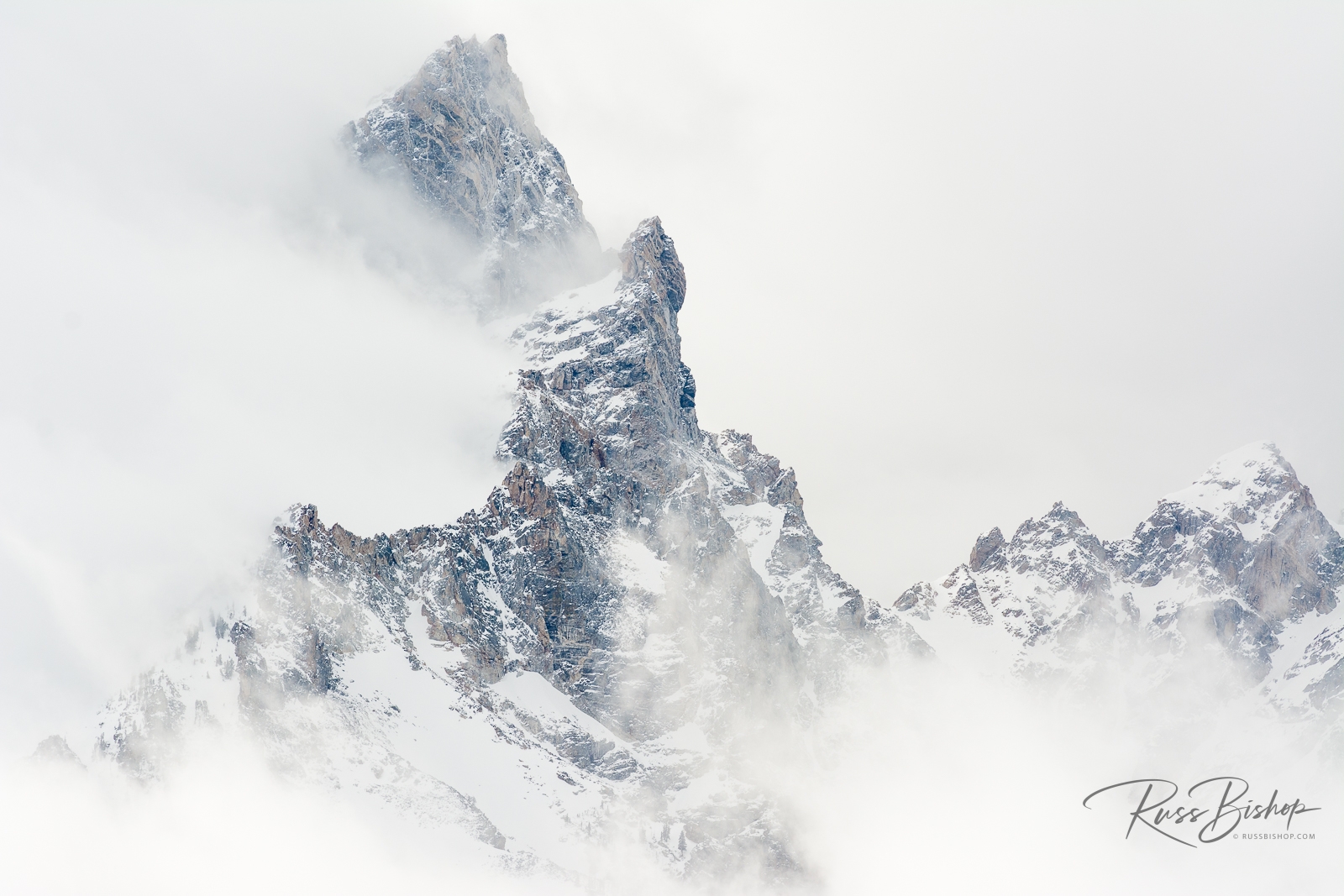
Fresh snow on fall aspens and pines along Bishop Creek, Inyo National Forest, Sierra Nevada Mountains, California USA (Russ Bishop/Russ Bishop Photography)

Fresh snow on fall aspens and pines, Inyo National Forest, California

There’s been an ongoing discussion in the photography world lately about art and originality, that of creating images that are not the photographer’s personal vision so much as an attempt to copy the work of others. In extreme cases some would argue this isn’t art at all, but rather a mechanized form of duplication. The unfortunate result is that many photographers are no longer willing to share information about specific locations, and those photographers involved in the practice are missing the opportunity to show the world their own unique vision.

This trend is ironic given that we’re a country born of rugged individualism, and photography above all is a form of personal expression. But it’s no surprise when we are surrounded by such a lack of creativity in society today – movie remakes of 70’s television shows; advertisements using surprisingly similar images; and politicians repeating the same words as if they are uniquely their own. Perhaps this lack of originality is due to tight deadlines and too little time in our fast-paced world, or simply a fear of the unknown.

Before I head off on a shoot (especially if it’s a location I’ve never been to before) I thoroughly research the area geographically and geologically, and I’ll also review images of the area as a reference point to get a sense of place. But then after immersing myself in the details at home, I use the travel time to clear my head and fine tune my receptors to soak in whatever the location may offer.

Instead of previsualizing, I prefer to see a place through a child’s eye as if I’m the first ever to experience it. I’ll often avoid the obvious viewpoint whenever possible in favor of an angle that combines the key elements of the scene in a fresh, new way. When that’s a challenge, I’ll try a different lens or shutter speed or perhaps just wait for the light or weather to change.

So dare to be different and embrace the unknown! Find your own unique vision in photography and in life – and enjoy the rewards of the path less traveled.


©Russ Bishop/All Rights Reserved

The Emotion of Motion

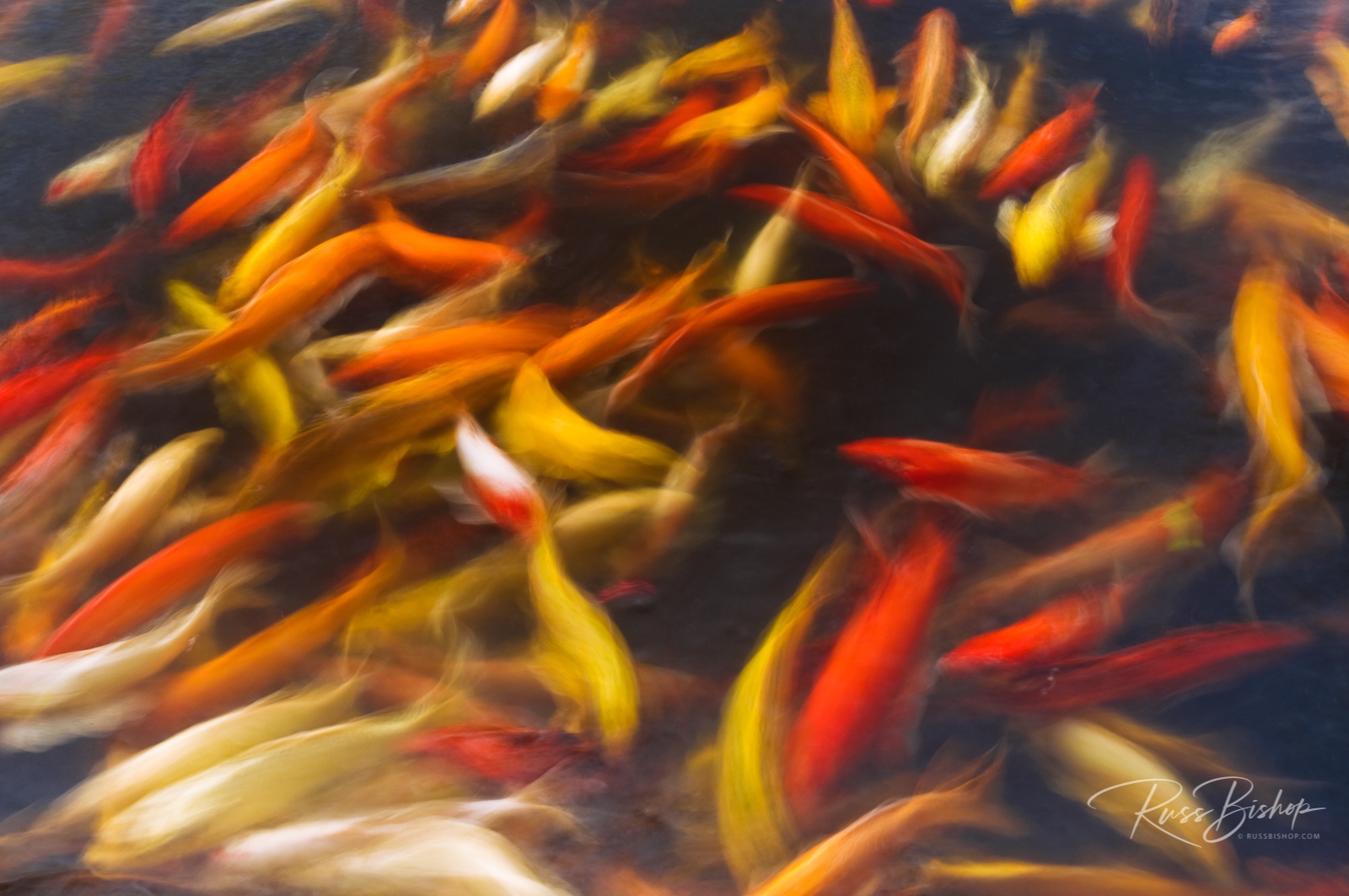
The Emotion of Motion. Koi pond, Island of Kauai, Hawaii
Koi pond, Island of Kauai, Hawaii

The Emotion of Motion. There’s something fascinating about visual movement that stirs our souls and creates a visceral response. I’m not referring to the exhilaration of skydiving or skiing down a mountain, but the more subtle visual connections we make while witnessing a dance performed on a stage, watching clouds race across a desert sky, or simply viewing a photograph of a silky waterfall frozen in time.

As photographers we have the privilege of stopping time or even slowing it down just long enough to give our viewers a glimpse of a world that can never be seen with our own eyes. We can illustrate a repetitive process over time such as a series of waves washing upon a shore, or create an abstract vision of color and form that has no resemblance to the natural world.

At these moments, there is a bond that occurs between subject and viewer that’s hard to put into words. Perhaps it’s our secret desire to slow the inevitable march of time or just a sense of voyeurism at seeing something beautiful that we know we shouldn’t be able to. I like to think of it as the emotion of motion.


©Russ Bishop/All Rights Reserved

Fall Color Photography – Where’s The Light?

Fresh snow on fall aspens and pines, Inyo National Forest, California USA

Fall Color Photography – Where’s The Light? Successful fall color photography obviously starts with planning around the seasonal changing of the leaves (and this Fall Color Map can help), but once you’ve scouted your location there’s another key factor to consider.

Where and how the color happens is dependent upon elevation and temperature and no two years are ever the same. The higher mountains of the west begin in mid-September, eastern hardwoods in October, and the lower red-rock country of the southwest typically in early November. Once you’ve settled on a destination and found that great grove of trees the next step is to understand the light.

It might seem like the vibrant reds or yellows before you would be faithfully reproduced by your sensor no matter what time of day, but understanding the quality of the light can go along way towards guaranteeing your success. Using backlight or sidelight when the sun is low on the horizon and illuminates the leaves from behind creates a wonderful warm glow, especially when set against a dark background.

Softlight is another great light source (illustrated above) that occurs when the sky is overcast and acts like a giant studio softbox. Under these conditions, it doesn’t matter what time of day you’re shooting as the shadows are eliminated and the uniform light both reduces the contrast while intensifying the colors.

So when the scene presents itself, consider the light and framing, and don’t be too quick to trip the shutter. A slight change in position or a little patience can often make the difference between a good image and a great one.


©Russ Bishop/All Rights Reserved