Afternoon haze over the Sierra Nevada foothills, Sequoia National Park, California
Simplify, Simplify. Thoreau’s famous words apply as much to successful landscape photography as life itself. Often when we first approach a classic scene we’re inclined to capture as much of it as possible in hopes that nothing is left out.
Many times a wide-angle view is the best perspective for those grand vistas, but it needs to be carefully composed in order to guide the viewer’s eye through the frame. Problems arise when there is too much information and the image becomes cluttered and confusing. That’s the time to go long and distill the key elements down to their essence.
As with taking on too much in our lives and missing the forest for the trees, sometimes we need to simplify the scene to make it stronger. By carefully cropping out distracting elements and focusing on light and form we can create images with more visual impact that connect with our audience on a deeper level.
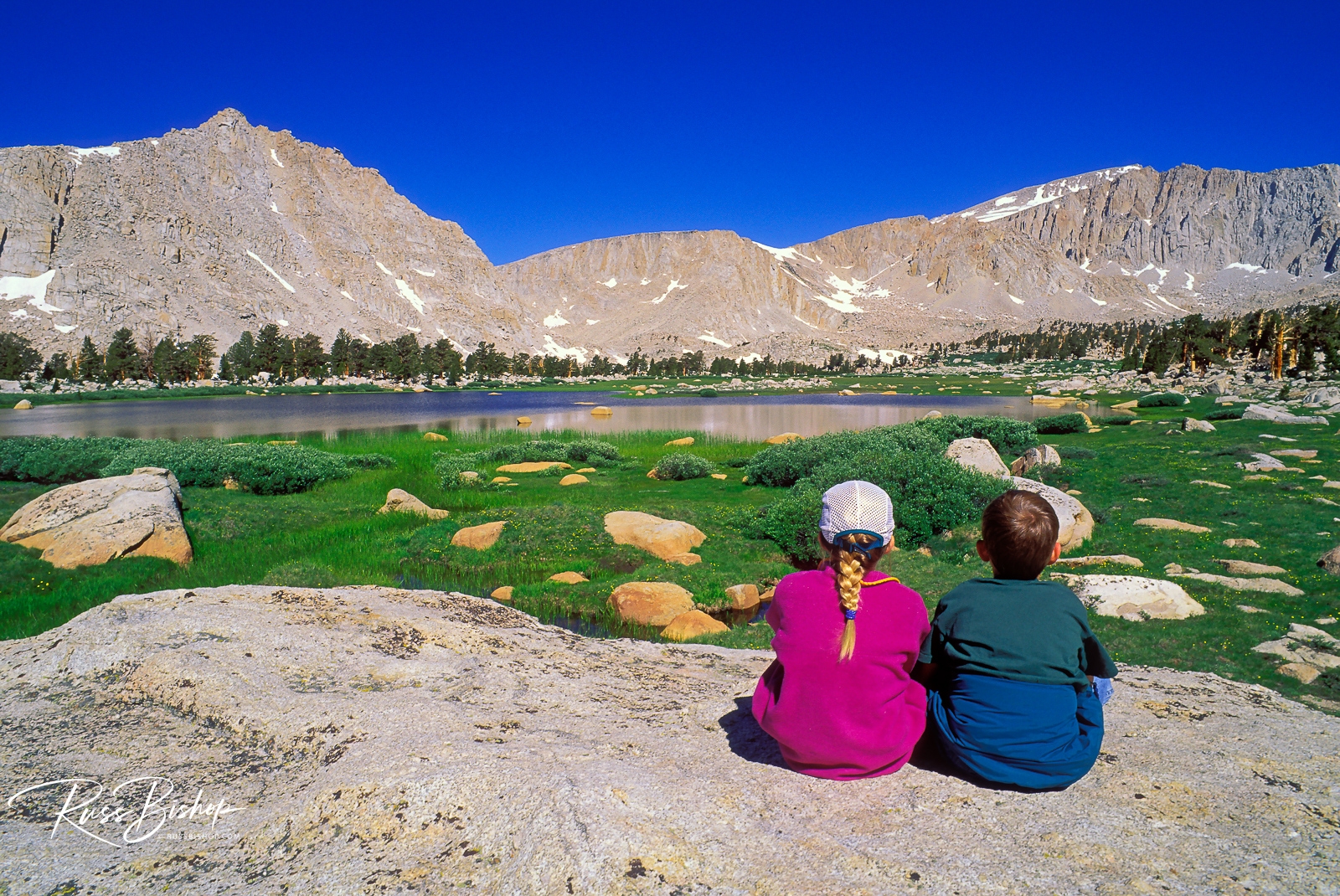
Kids enjoying the view at Cottonwood Lakes Basin, John Muir Wilderness, California
Kids in Nature. I have mixed feelings as I write this post. The image is a favorite location in the Sierras and a fond memory of a special trip with my kids to the wilderness. But it also holds a deeper meaning, a realization that future generations may not see the value in protecting such areas especially if they have little opportunity to experience them at an early age and ultimately appreciate and preserve them.
Many children today are losing the basic understanding that nature exists even in their own backyards and neighborhoods, which further disconnects them from their knowledge and appreciation of the natural world. It’s important to realize that enjoying a city park can be just as valuable as visiting a wilderness area in terms of instilling a life-long connection with nature.
Richard Louv, in his book Last Child in the Woods, explores research linking the absence of nature in children’s lives to rising rates of obesity, attention disorders, and depression. His findings point to an overload of electronic media combined with an understandable concern for safety from parents unwilling to just let their kids roam free.
Fortunately Ken Burns popular series America’s Best Idea spurred new interest in our national parks, bringing families together in the outdoors and reversing a trend in recent years referred to as “nature deficit disorder”.
I am a member of several conservation organizations whose common goal is to preserve the natural world and to remind us of the less obvious ways that nature enhances our lives. It can improve our physical health and mental outlook, and most importantly it nurtures our souls. “In wildness is the preservation of the world” – today Thoreau’s words are as meaningful as ever and if embraced by the next generation will ring true long into the future.
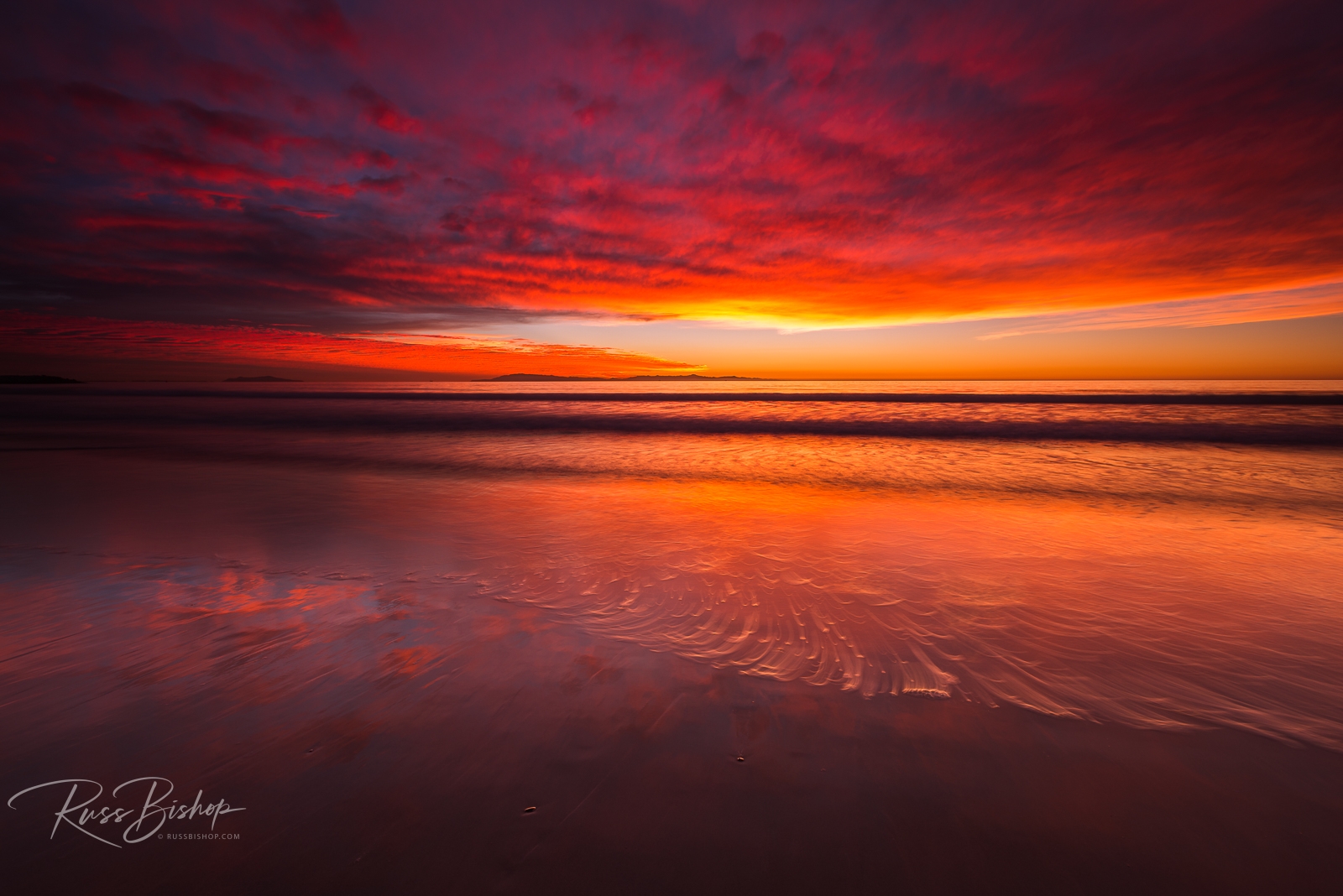
Sunset over the Channel Islands from Ventura State Beach, Ventura, California
June 8th is World Oceans Day – a chance to celebrate the bodies of water that make up 70% of our planet and provide food, recreation and place to rejuvenate the spirit. As home to an estimated 230,000 marine species, our oceans are a vast wilderness with ecosystems critically linked with our own. Unfortunately many of the earth’s inhabitants never see or experience our oceans, yet our impact through pollution and over-fishing has taken its toll.
Organizations such as the The Ocean Project provide a great opportunity to get directly involved in protecting the future of our oceans through personal and community involvement. Working with zoos, aquariums, and conservation groups, they sponsor beach cleanups, educational programs, art contests, film festivals, sustainable seafood events, and other activities that help to raise consciousness of how our lives depend on the oceans and what we can do to keep them healthy long into the future.