Fall Color Photography – Where’s The Light?

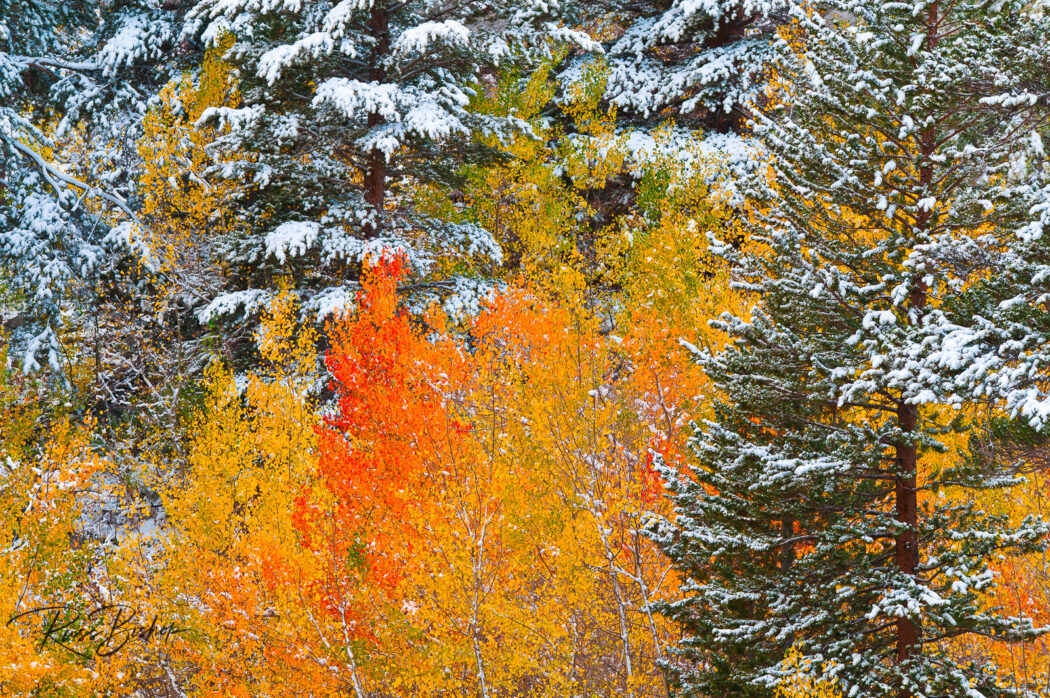
Fresh snow on fall aspens and pines, Inyo National Forest, California USA

Fall Color Photography – Where’s The Light?

Successful fall color photography starts with planning around leaf changes. One of the many online interactive fall color maps can be a good starting point. After scouting your location, there’s another key factor to consider.

Where and how the color happens is dependent upon elevation and temperature.  No two years are ever the same. The higher mountains of the west begin in mid-September. Eastern hardwoods follow in October. The lower red-rock country of the southwest typically begins in early November.

Once you’ve settled on a destination and found that grove of trees, the next step is to understand the light. It may seem that vibrant reds or yellows will be faithfully reproduced by your sensor at any time. However, understanding the quality of light can help guarantee your success.

Using backlight or sidelight when the sun is low on the horizon and illuminates the leaves from behind creates a wonderful warm glow, especially when set against a dark background.

Softlight is another great light source (illustrated above) that occurs when the sky is overcast and acts like a giant studio softbox. Under these conditions, it doesn’t matter what time of day you’re shooting. The shadows are eliminated resulting in uniform light that both reduces the contrast while intensifying the colors.

So when the scene presents itself, consider the light along with the framing, and don’t be too quick to trip the shutter. A slight change in position and a little patience can often make the difference between a good image and a great one.


©Russ Bishop/All Rights Reserved
The Forest For The Trees

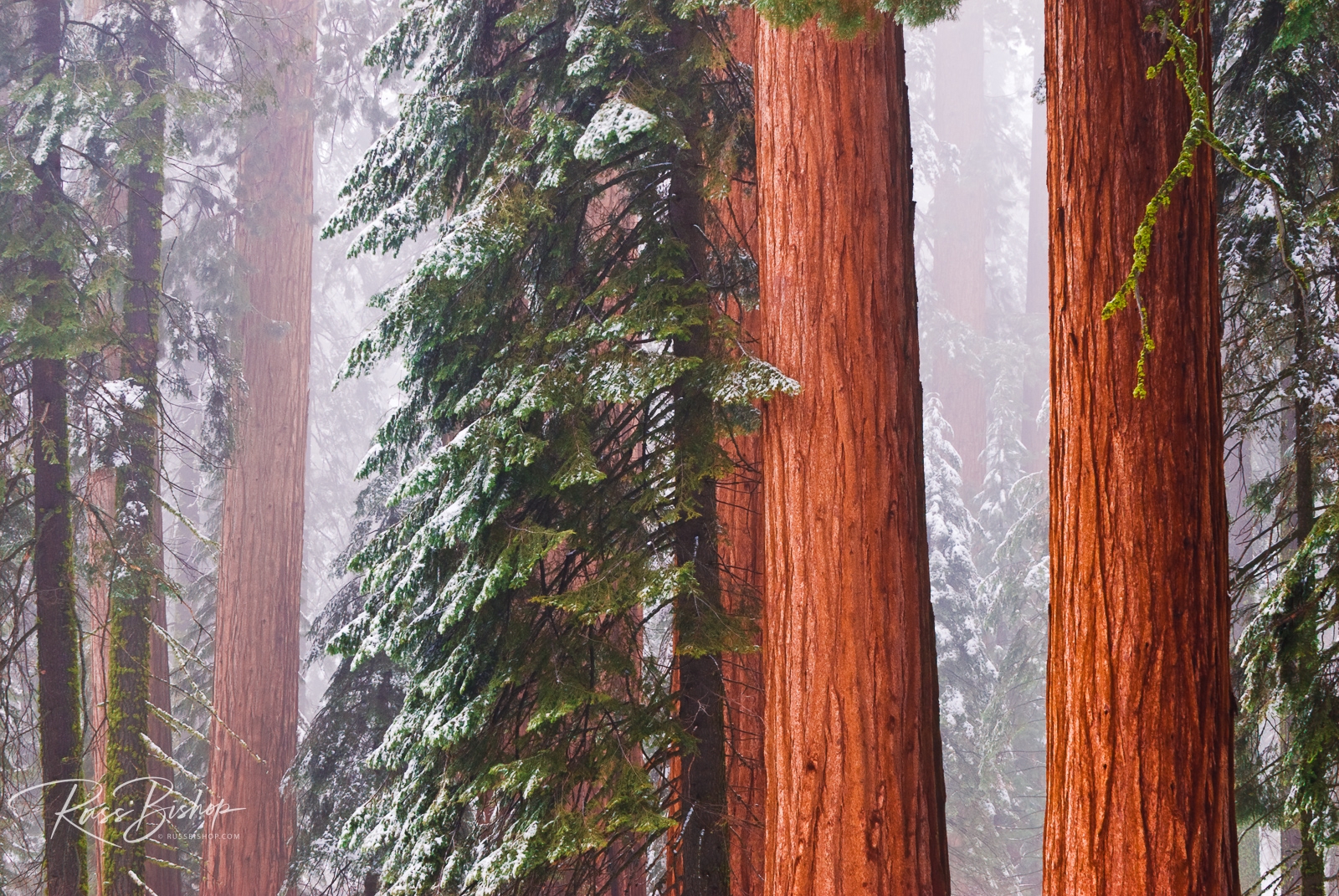
The Forest For The Trees. Giant Sequoia in winter, Giant Forest, Sequoia National Park, California
Giant Sequoia in winter, Giant Forest, Sequoia National Park, California

In today’s modern world of fast-paced digital photography it’s easy to feel overwhelmed by the constant stream of new technology. Cameras, software and accessories are released at an alarming rate, and it’s easy to get caught up in the race to stay ahead of the curve. But it’s important to remember that first and foremost we are artists, and that technology serves the art and not the other way around. Don’t lose sight of the forest for the trees.

You can be sure Rembrandt didn’t lust over the latest brushes or Ansel Adams the latest developer or papers whenever their interpretation of light and shadow faced a challenge. Instead, they trusted their familiar tools even more to allow their hand and eye (the only lasting tools of the trade) to record the scene faithfully.

When you do upgrade your equipment (and we all do at some point) you owe it to yourself to thoroughly understand its features and functions. No one likes reading manuals, but it’s time well spent that you’ll appreciate the next time the light is fleeting and you’re focused on capturing the moment, not fumbling with dials or menu settings.

So purchase when you must, but don’t lose sight of the big picture. Put your energy into developing your vision and spend less time worrying about the march of progress. Art is about the seeing and no one will ever look at your images and say “that was made with a Nikon or Canon”. More likely, they will say “what was s/he feeling”!

The more comfortable you are with your equipment the more it becomes an extension of your mind’s eye and allows you the freedom to truly see the world around you. And that’s when your vision outshines all the other tools in your bag.


©Russ Bishop/All Rights Reserved

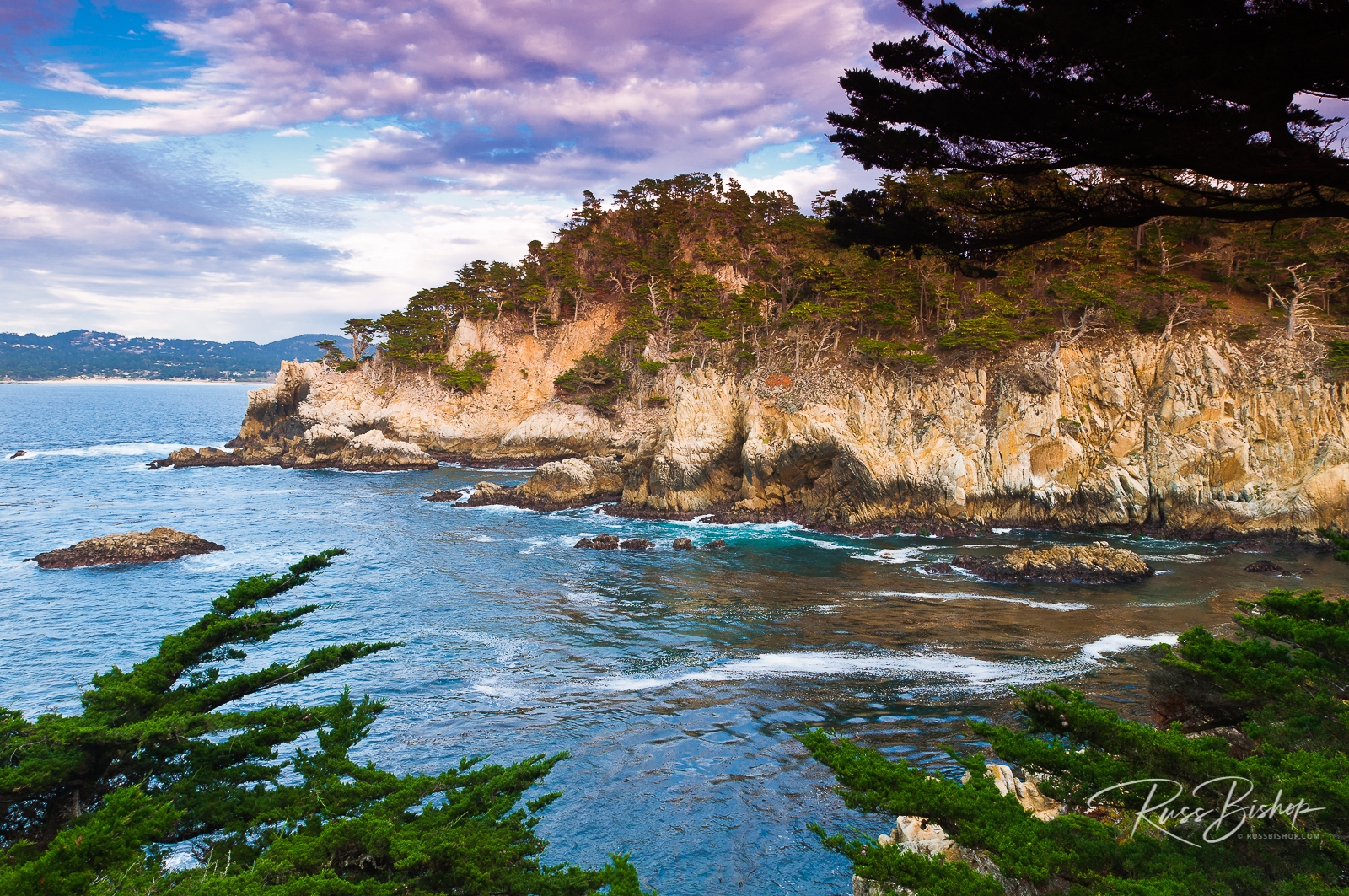
Point Lobos State Reserve

Point Lobos State Reserve. Rocky cliff along the Cypress Grove Trail, Point Lobos State Reserve, Carmel, California
Rocky cliff along the Cypress Grove Trail, Point Lobos State Reserve, Carmel, California

Point Lobos State Reserve on the Big Sur Coast south of Carmel is the quintessential California seaside location. Once the haunt of luminary local residents Edward Weston and Ansel Adams, its rocky cliffs, cypress groves, pebbled beaches, and blue lagoons provide an endless variety of photographic opportunities.

As part of the Monterey Bay National Marine Sanctuary its waters are home to abundant sea life including the endangered sea otter and California’s state fish, the garibaldi making it a favorite with divers. Extensive trails wander through rare groves of Monterey Cypress, which only occur here and in the nearby town of Monterey, and are the classic wind-swept symbol of the central California coast.

Exploring the Big Sur area provides a wealth of natural history opportunities and a visit to Point Lobos is a highlight of any trip.


©Russ Bishop/All Rights Reserved