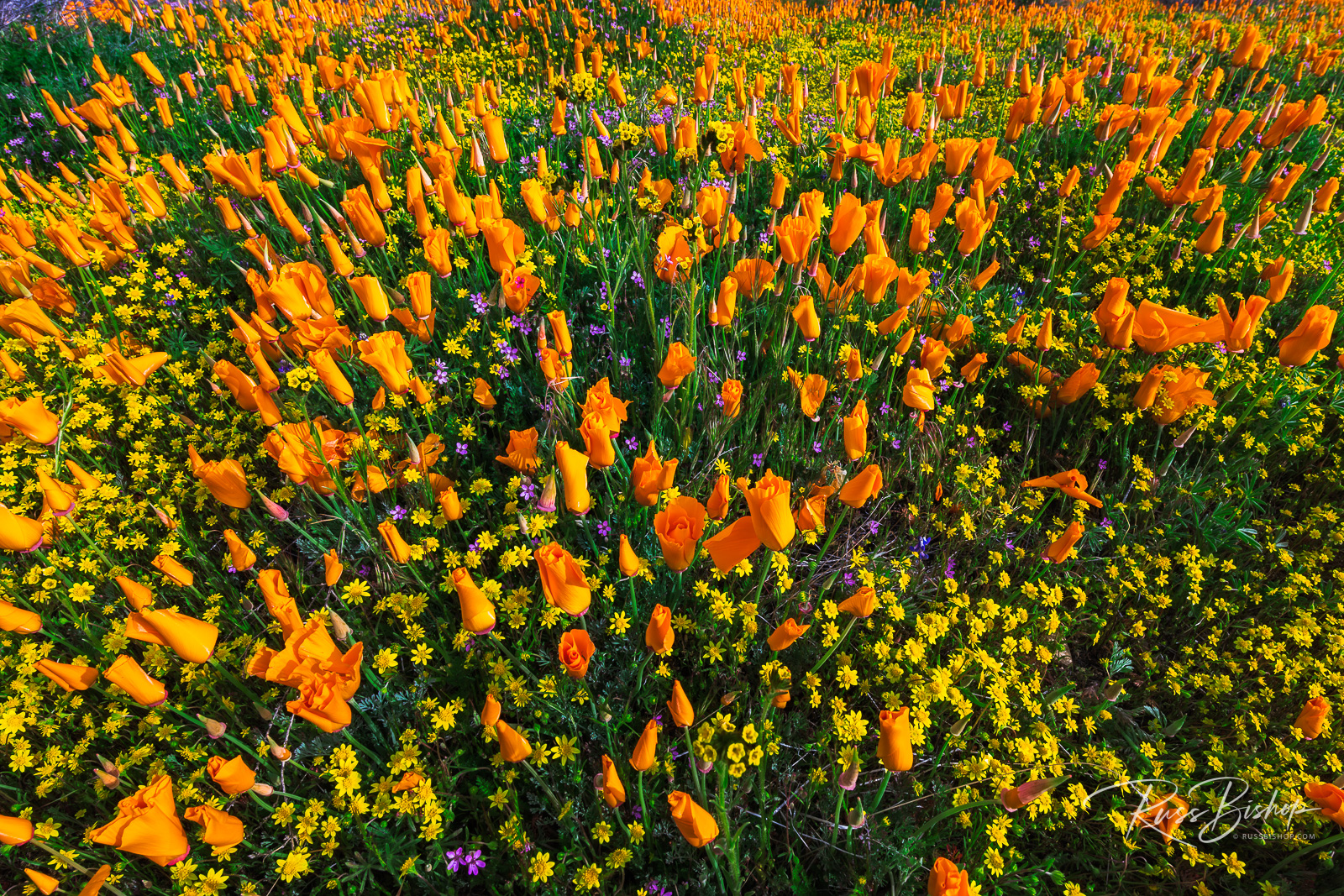
California Poppies and Goldfield, Antelope Valley, California
June 15th is Nature Photography Day!
Created in 2006 by NANPA, the North American Nature Photography Association, it promotes the enjoyment of nature photography and spotlights the many ways images of the natural environment have helped to advance the cause of conservation and habitat preservation both locally and internationally.
NANPA’s mission is to further the art and science of nature photography as a medium of communication, nature appreciation, and environmental protection. This year marks the 17th anniversary of Nature Photography Day, a great time to celebrate the beauty of nature and share your passion for photography with friends and family.
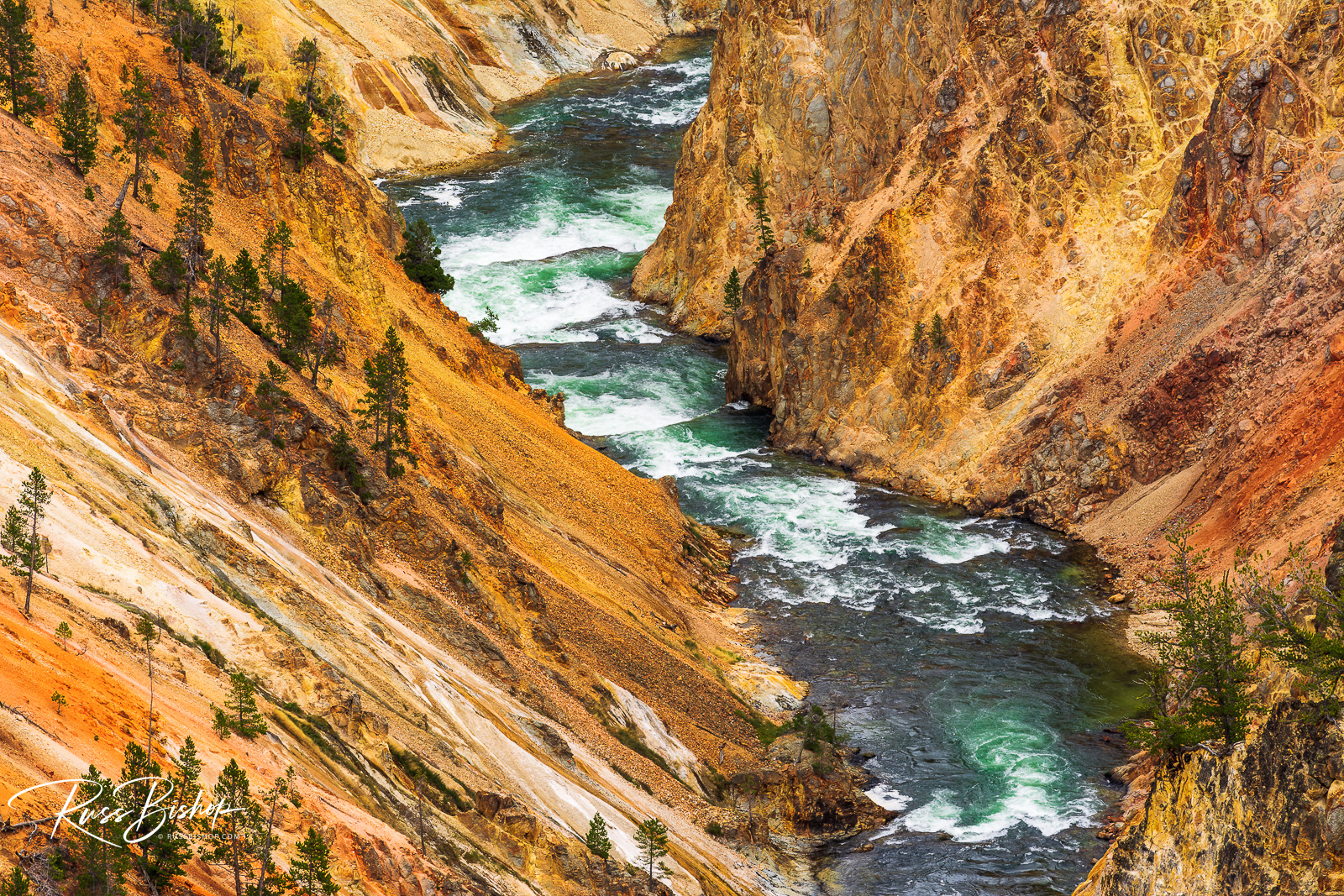
Grand Canyon of the Yellowstone, Yellowstone National Park, Wyoming
The Grand Canyon of the Yellowstone in Wyoming’s Yellowstone National Park is one of the great wonders of the world. Though not as famous, as large, or as old as Arizona’s grand fissure, what it lacks in size and scope, it makes up for in color and curiosity.
As with much of this hyperactive park, the canyon below the Lower Yellowstone Falls was once the site of a geyser basin. During the last ice age large ice dams formed near the mouth of Yellowstone Lake. Then, when they melted, a huge volume of water was released downstream causing massive flash floods and catastrophic erosion that carved through the soft rhyolite lava flows and created the present-day canyon.
It’s unique colors are also a result of hydrothermal alteration and exposure to the elements. Most of the yellow coloring is the result of iron present in the rock rather than sulfur as most people assume. The exposed rocks are oxidizing and essentially the canyon is slowly rusting.
The Yellowstone River begins on the slopes of Younts Peak, south of the park, and travels more than 600 miles to North Dakota where it empties into the Missouri River. It is the longest undammed river in the continental United States, and it’s evolution continues to shape this beautiful canyon.
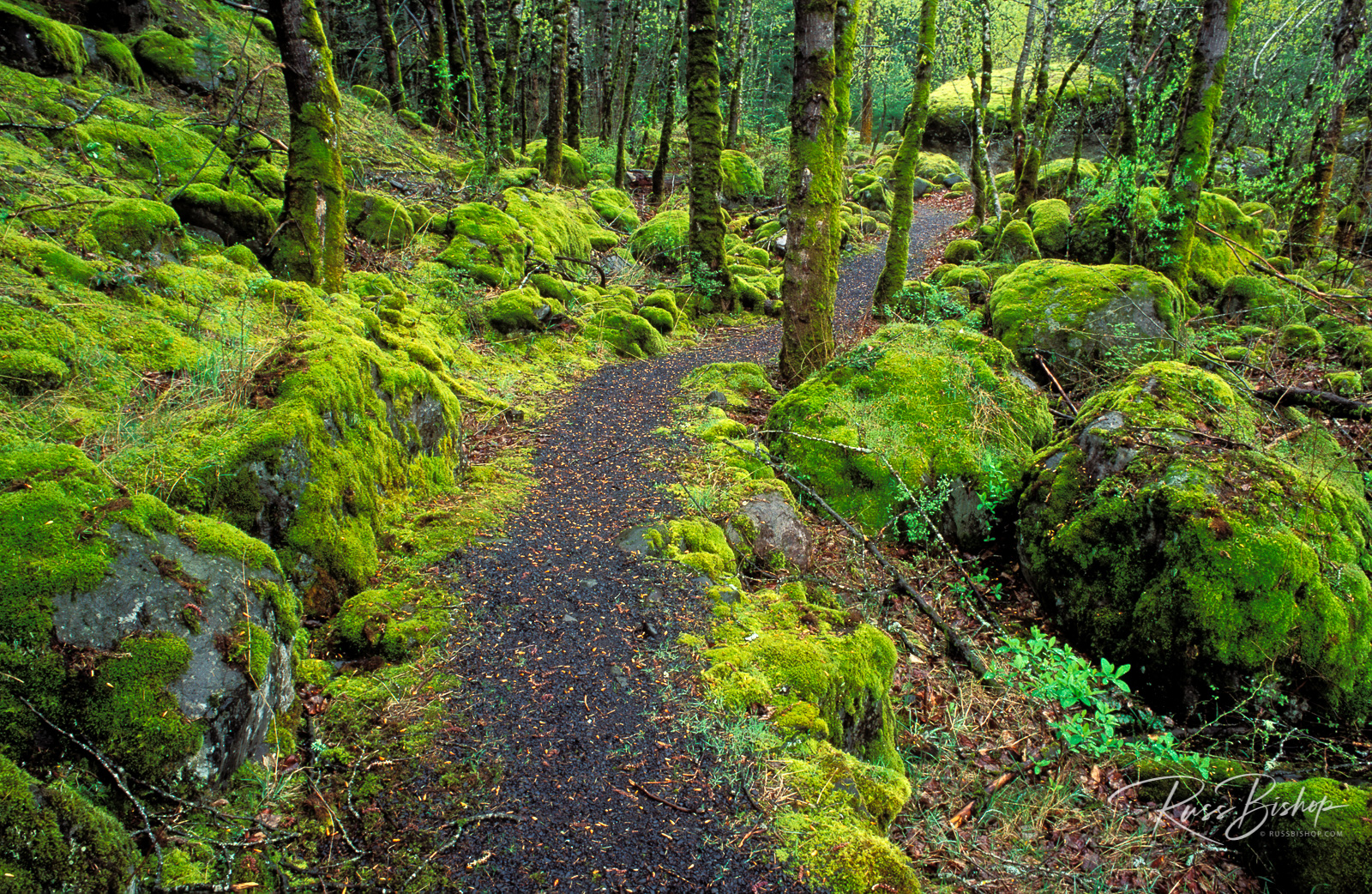
Trail through moss covered forest along the Columbia River, Fort Cascade National Historic Site, Washington
As the world struggles with a pandemic not seen in our lifetime it’s important to focus on the positive. Social distancing and working from home has become the new norm, but creative ways to stay healthy and a shift in the thinking of health care providers have also emerged.
Prior to the current situation an interesting phenomenon had already been taking hold in the medical profession. Just when the cost of health insurance had skyrocketed, doctors across the country began trying a new approach. Instructing their patients to “take a hike” as a prescription for good health – literally.
They’re not trying to show you the door, but instead are medicating patients with nature to treat everything from heart disease to attention deficit disorder. Detailed prescriptions are often written to include park or preserve locations, specific trails and mileage. In many ways, as Ken Burns pointed out in his excellent series “America’s Best Idea”, our national park system can and should be an integral part of our healthcare system.
As a landscape photographer, I typically spend a great deal of time on and off the trail, and I feel fortunate that my work not only helps to protect these special places, but promotes my health in the process. Photography and outdoor recreation have always been an ideal match, and now they can be considered part of your health regimen. They could even lower your medical bills – and that’s an idea worth spreading!
“Those who contemplate the beauty of the earth find reserves of strength that will endure as long as life lasts.” ― Rachel Carson