In today’s mobile world of social media and online everything we are exposed to more daily imagery than at any previous time in history. As a result, our visual sensitivity is developing at a rapid rate along with the need to mentally process these images in a timely manner.
Much the same way we have a hard time watching the dated animation from old sci-fi movies, it’s easy to become more critical of what we like (and Like on Facebook). And with all of the various processing techniques (HDR, focus stacking, exposure blending to name a few) it’s also easy to be lulled into sensory overload from this highly polished visual world. But whatever technology may hold for the future, one thing will never change and that’s the need to create an emotional response with our images.
A technically perfect image may have the wow factor of a Hollywood blockbuster, but perfection does not necessarily create heart – and that’s really what photography is all about. Regardless of the subject matter, lens used or processing applied, convey the mood and emotion in your images through lighting, weather or technique and your photography will always rise above the crowd.
“Don’t shoot what it looks like. Shoot what it feels like.” -David Alan Harvey
“Sands of Time” ~ The Wave, Paria-Vermilion Cliffs Wilderness, Arizona
Landscape Tip: What’s Your Angle? Captivating landscape photography typically includes one or more elements that make it stand out from the crowd. Magical light, richly saturated colors, and dramatic vistas can all make for great images, but sometimes we’re not rewarded with these sure-fire conditions even after the long hike or braving the inclement weather.
Fortunately there are other ways to create visually dynamic imagery when mother nature is not cooperating – namely your lens and your eyes. Perspective is a powerful tool that is limited only by your choice of focal length and framing.
A wide-angle lens with both excellent depth of field and a wide field of view can be used to emphasize a foreground element such as a plant or rock within the context of its larger mountain or desert environment. In most cases this also creates visual tension within the frame by directing the viewer’s eye from near to far elements, which in turn adds drama to the composition.
So the next time the elements aren’t working in your favor try adding a little visual spice to the scene with this simple technique. A subtle change in perspective through lens selection or camera position can entice your viewers to linger within the frame and might just turn a good image into a great one.
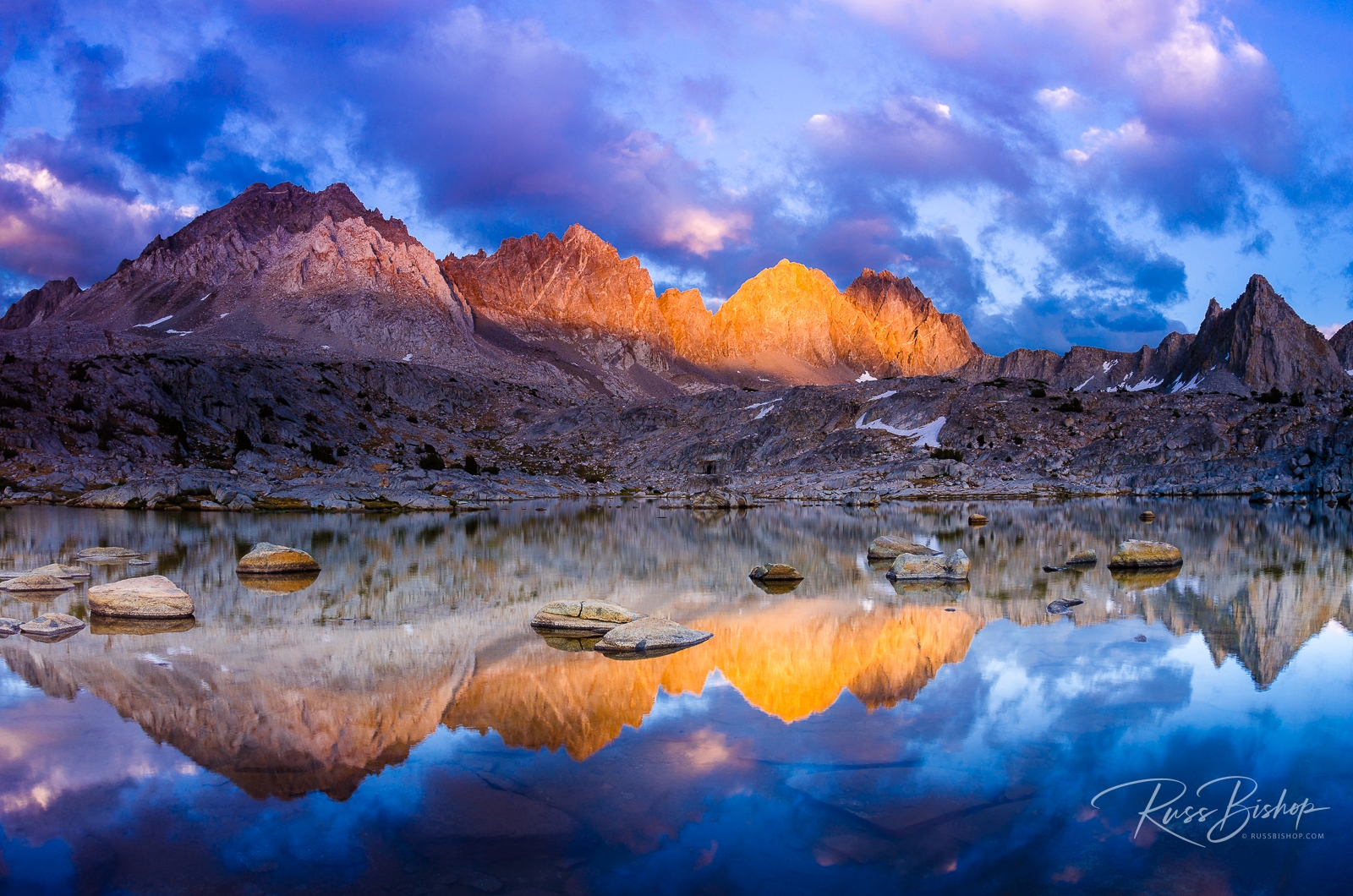
Hiker on the Bishop Pass trail in Dusy Basin, Kings Canyon National Park, California
Don’t Leave Home Without It ~ When planning a photo shoot many items are obvious and not likely to be left behind such camera bodies, tripods, or a favorite bag. But there’s a reason surgeons and pilots use a checklist before every flight or operation. Even though they have performed these tasks a hundred times, the possibility of forgetting one important item is not acceptable.
Granted photography is not quite as extreme, but we can still benefit from this time-worn ritual. A checklist will alleviate much of the anxiety both when you’re packing, and when you’re far from home and realize you’re missing an important piece of gear.
Every trip is unique. Duration, location and expectations will determine whether specialized gear or extra food and clothing is required, but even the short trips close to home can benefit from good preparation.
Here’s a simple list of action items that should be included on any photo trip:
Do your homework – create a visual idea file of images to develop a sense of place for where you are traveling and images you hope to make. Google Earth can be a huge help in determining landforms and cityscapes alike, and with the Photographer’s Ephemeris you’ll know exactly when the sun will set and where the moon will rise.
Gear List – Make a list of personal gear and camera gear you feel you’ll need for your destination. For extended trips, start these lists at least a month prior to your travel to allow time to modify. Check the online forums for recommendations from those who have been to the location. Often less is more when trying to travel light.
Rentals – If you’re planning to rent a piece of gear, be sure to reserve it well in advance to allow plenty of time for availability and shipping.
Location List – Create a checklist of locations you plan to visit and subjects you’d like to photograph. You won’t make it to all of them, but having options will allow flexibility when the weather or other obstacles alter your plans.
Batteries & Memory – Make sure you have batteries, chargers and memory cards for the specific camera bodies you’ll be taking. Portable solar panels are great for extended backcountry trips, and 12 volt inverters are perfect when working from a car.
Card Reader – Memory card readers for the cards you’re taking are much quicker than downloading directly from the camera. Especially on longer trips when evening social time and sleep are often at a premium!
Software – Make sure your laptop or tablet has the software or apps you plan to use and that they are up to date.
Camera Manuals – Download the PDF instruction manuals for your camera bodies to your phone or tablet. No one likes to read manuals, but knowing what the error code is when you’re miles from home can be a real asset.
Camera Cleaning – Clean all lens elements and filters prior to leaving, and pack a sensor cleaning kit. Dust is the bane of digital photography and it will find its way onto your sensor every time you change lenses.
Repairs – Pack a small photo repair kit, including jeweler’s screwdrivers, pliers, tweezers, and super glue.
Quick Release – QR plates and L-brackets are a real time-saver in the field, but are specific for each camera body. Make sure to bring the correct ones.
Weather Report – Check the weather for the location of your destination both for comfort and alerts. Services like Weather Underground have great apps for phone and tablet with highly detailed forecasts.
Clothing – Pack clothing items such as gloves, a jacket and shoes or boots that are appropriate for the destination. The layering system including a base layer, insulating layer, and waterproof shell has been the standard for mountain travellers for years, but it will serve you well anywhere.
Nutrition and Hydration – Take a water bottle and energy bars (even if you only plan to be out for the afternoon). A water filter is a great option to save on weight if you’ll be near a water source.
First Aid – Always carry a small emergency first aid kit.
Obviously this list will vary depending on the location and duration of your trip, but it’s a good starting point for any photographic outing. There will always be surprises and setbacks, but as the saying goes, “Luck favors the prepared!”.
The confidence of knowing that you’ll be comfortable, and that your gear will be up to the task, will enable you to focus your energy on creativity and the photographic opportunities that present themselves.