Afternoon haze over the Sierra Nevada foothills, Sequoia National Park, California
Simplify, Simplify. Thoreau’s famous words apply as much to successful landscape photography as life itself. Often when we first approach a classic scene we’re inclined to capture as much of it as possible in hopes that nothing is left out.
Many times a wide-angle view is the best perspective for those grand vistas, but it needs to be carefully composed in order to guide the viewer’s eye through the frame. Problems arise when there is too much information and the image becomes cluttered and confusing. That’s the time to go long and distill the key elements down to their essence.
As with taking on too much in our lives and missing the forest for the trees, sometimes we need to simplify the scene to make it stronger. By carefully cropping out distracting elements and focusing on light and form we can create images with more visual impact that connect with our audience on a deeper level.
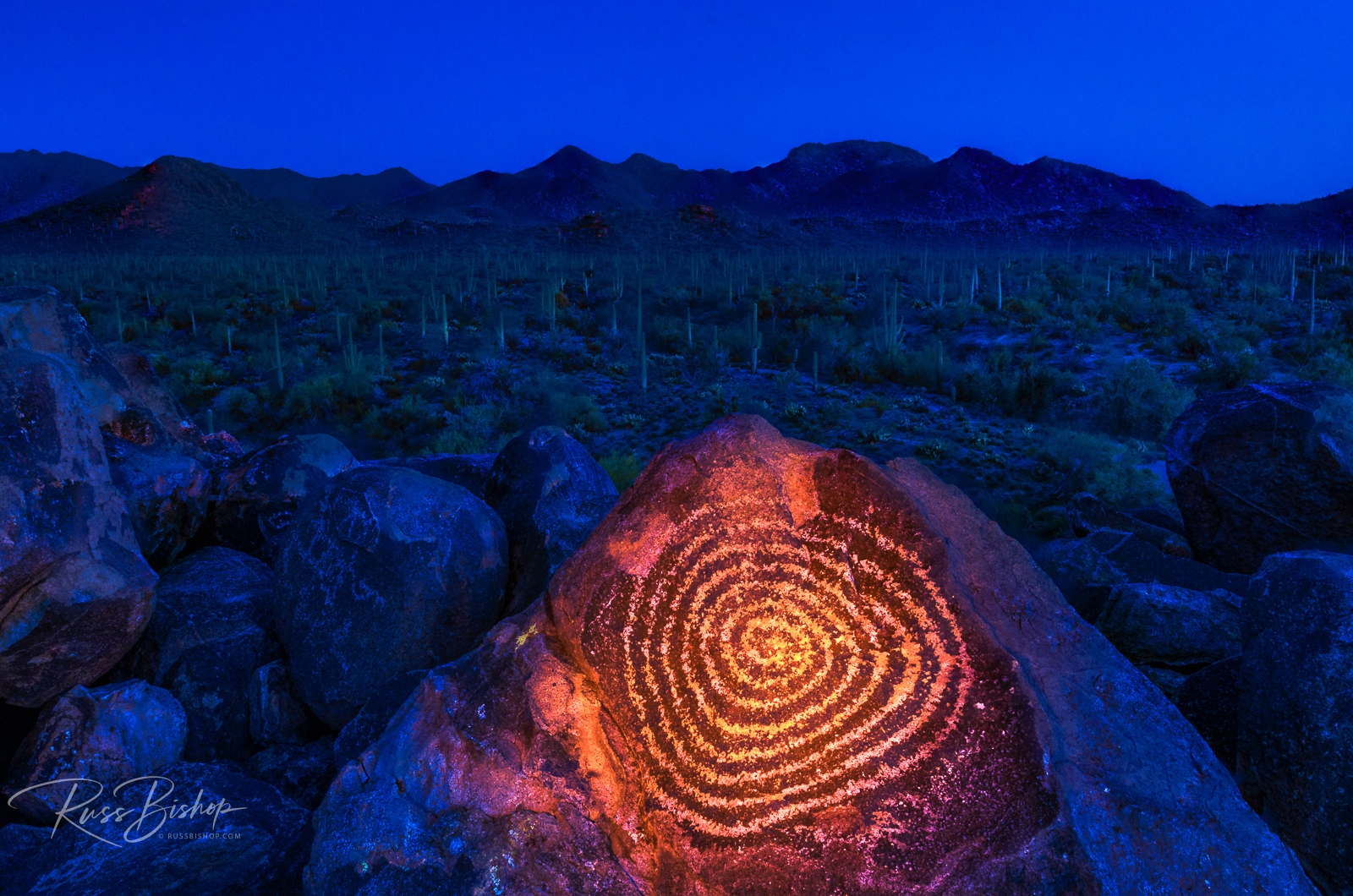
Petroglyphs on Signal Hill, Saguaro National Park (Tucson Mountain District), Arizona
Saguaro National Park is unique among the nation’s natural sanctuaries. Almost entirely a wilderness preserve, it surrounds a major metropolitan area yet manages to retain its remote and wild feeling. Just minutes from the city lights of Tucson you’ll find yourself immersed in a world rich in Native American history and the striking flora of the Sonoran Desert.
Two units separated by the city, the Tucson Mountain District to the west and the Rincon Mountain District to the east, provide two unique environments. Signal Hill in the Tucson Mountain District includes hundreds of ancient Hohokam petroglyphs surrounded by dense saguaro forests and wonderful views of the local mountains.
The Rincon Mountain District to the east includes the land protected in the original monument before it became a park in 1994. It’s a desert sky island home to bears, cougars, and the elusive kudamundi. This side of the park has fewer saguaro than its western counterpart, but they are larger in size due to greater amounts of rainfall and runoff from the Rincon Mountains. Rising from the desert floor to over 8,500 feet, these rugged peaks even support a temperate conifer forest – rare in this desert climate.
The American southwest is a fascinating land of beauty and contrast. And for anyone searching for great desert photography, a chance to connect with past civilizations or simply find desert solitude Edward Abbey style, Saguaro National Park is a prime destination.
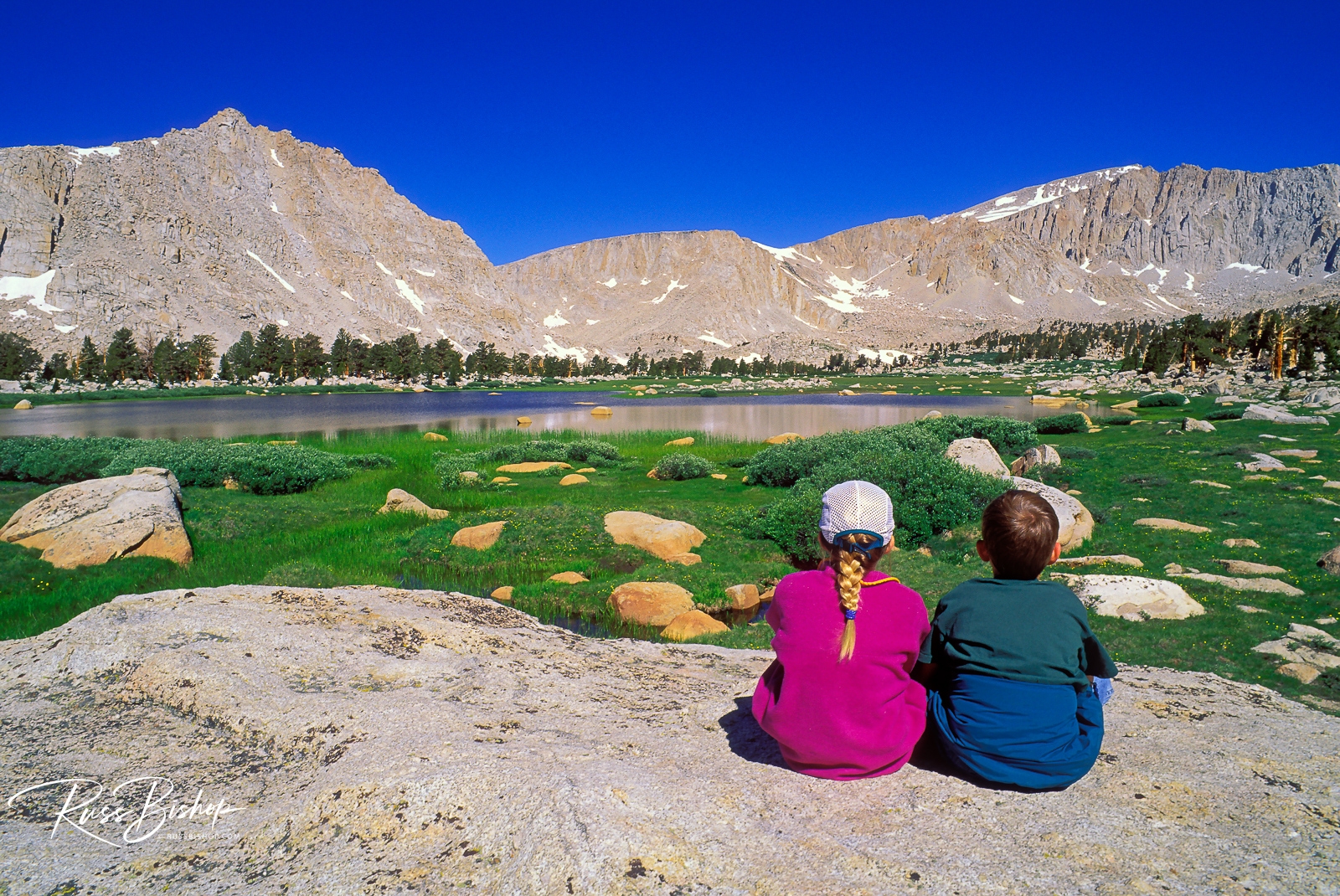
Kids enjoying the view at Cottonwood Lakes Basin, John Muir Wilderness, California
Kids in Nature. I have mixed feelings as I write this post. The image is a favorite location in the Sierras and a fond memory of a special trip with my kids to the wilderness. But it also holds a deeper meaning, a realization that future generations may not see the value in protecting such areas especially if they have little opportunity to experience them at an early age and ultimately appreciate and preserve them.
Many children today are losing the basic understanding that nature exists even in their own backyards and neighborhoods, which further disconnects them from their knowledge and appreciation of the natural world. It’s important to realize that enjoying a city park can be just as valuable as visiting a wilderness area in terms of instilling a life-long connection with nature.
Richard Louv, in his book Last Child in the Woods, explores research linking the absence of nature in children’s lives to rising rates of obesity, attention disorders, and depression. His findings point to an overload of electronic media combined with an understandable concern for safety from parents unwilling to just let their kids roam free.
Fortunately Ken Burns popular series America’s Best Idea spurred new interest in our national parks, bringing families together in the outdoors and reversing a trend in recent years referred to as “nature deficit disorder”.
I am a member of several conservation organizations whose common goal is to preserve the natural world and to remind us of the less obvious ways that nature enhances our lives. It can improve our physical health and mental outlook, and most importantly it nurtures our souls. “In wildness is the preservation of the world” – today Thoreau’s words are as meaningful as ever and if embraced by the next generation will ring true long into the future.