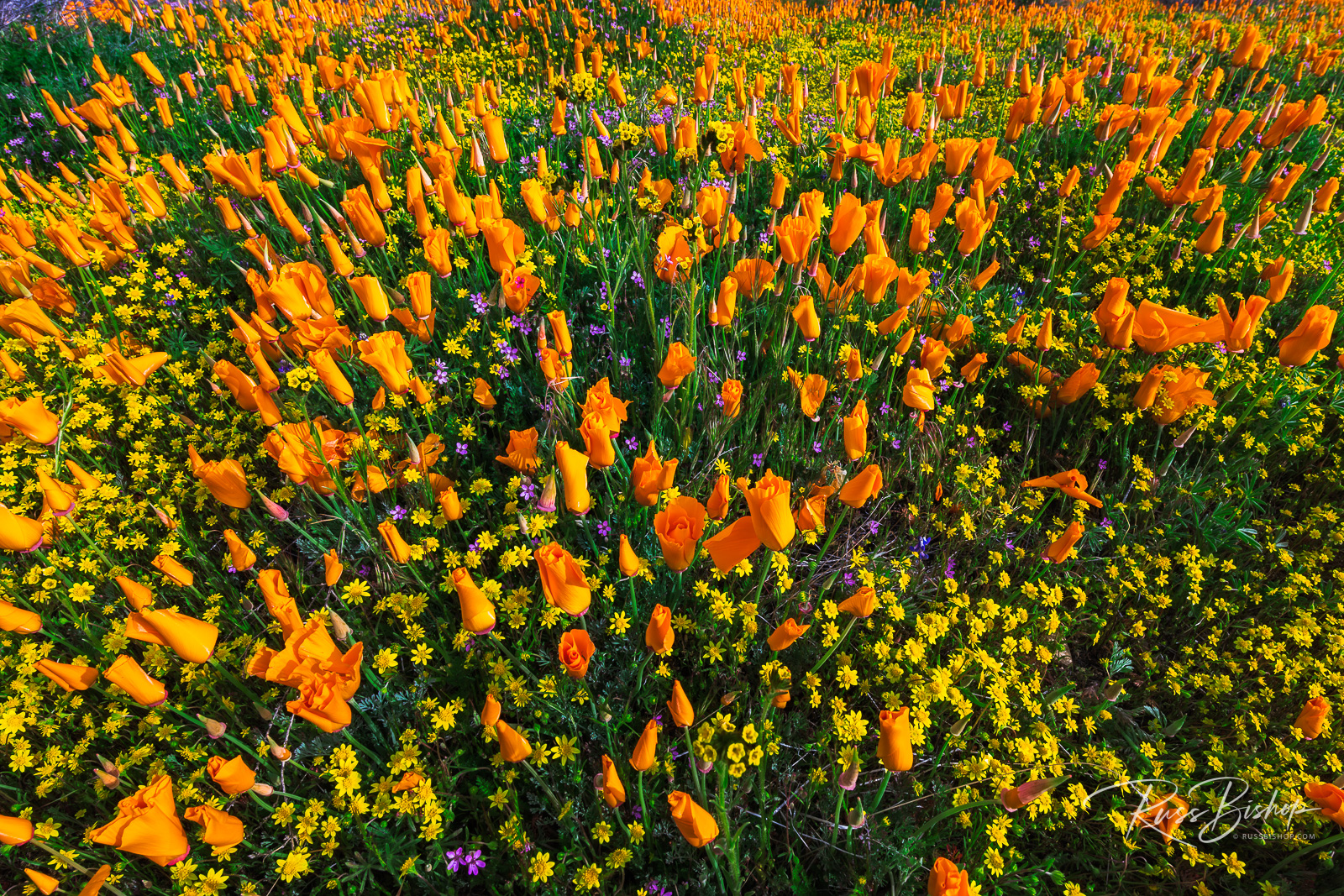
California Poppies and Goldfield, Antelope Valley, California
June 15th is Nature Photography Day!
Created in 2006 by NANPA, the North American Nature Photography Association, it promotes the enjoyment of nature photography and spotlights the many ways images of the natural environment have helped to advance the cause of conservation and habitat preservation both locally and internationally.
NANPA’s mission is to further the art and science of nature photography as a medium of communication, nature appreciation, and environmental protection. This year marks the 17th anniversary of Nature Photography Day, a great time to celebrate the beauty of nature and share your passion for photography with friends and family.
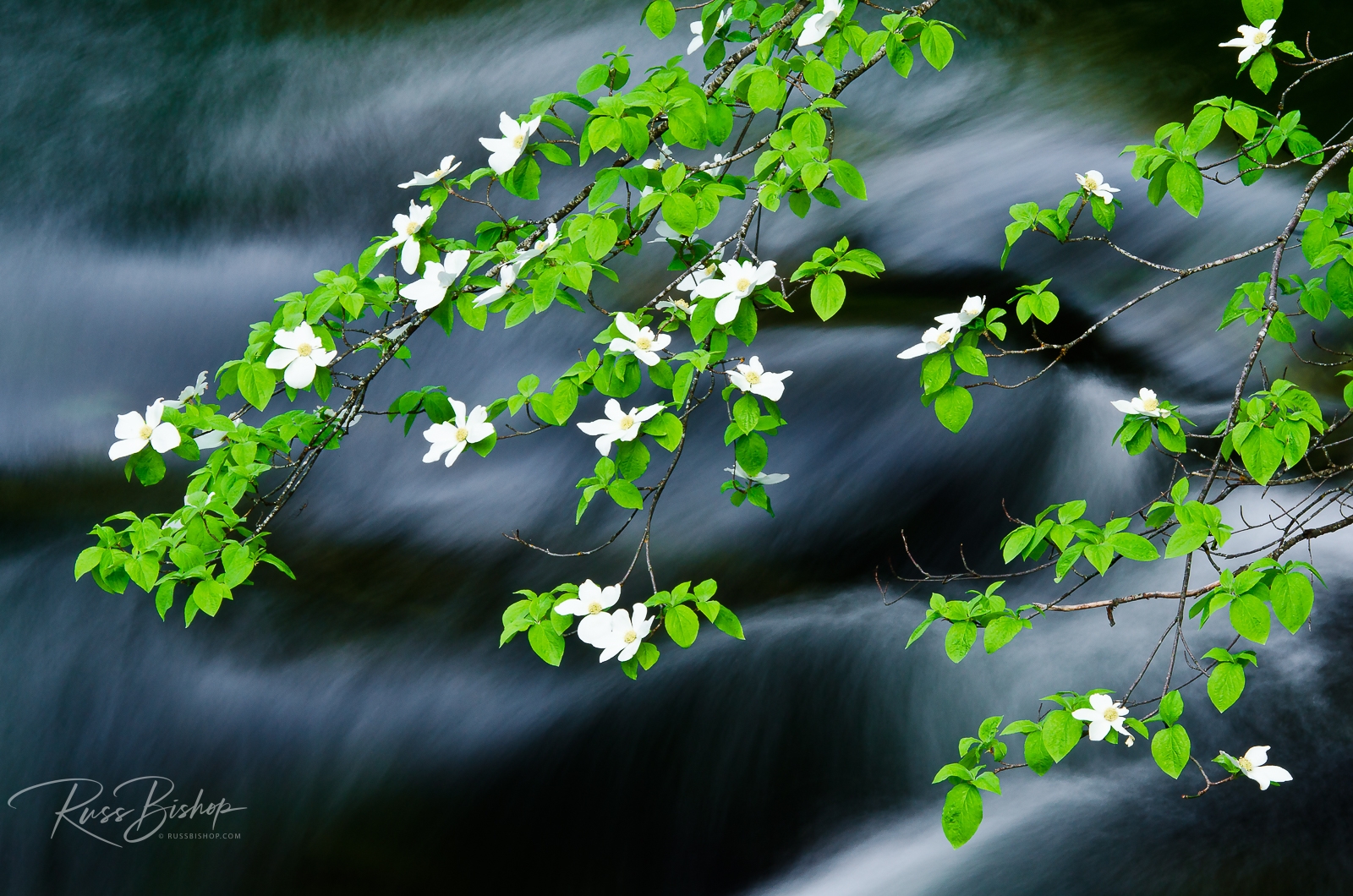
Mountain Dogwood above the Merced River, Yosemite National Park, California
Spring is just around the corner and with the regular precipitation we’re seeing (compared to years past) it’s expected that the popular high desert wildflower displays should put on another great show. The typical hot-spots out west including Antelope Valley, Anza-Borrego and Death Valley need rain in January for the flowers to germinate and this year is shaping up nicely.
But for those looking for a more reliable spring fix you just need to set your sights a little higher. All that color, grace, and beauty will make a showing – just in a slightly different form and at a higher elevation. Blooming trees and shrubs like Yosemite’s famous Mountain Dogwood (Cornus nuttallii) and the vibrant Western Redbud (Cercis occidentalis) aren’t as susceptible to seasonal changes and should still be in full glory later in April and May when the desert annuals are starting to wind down.
Spring is a wonderful time to visit Yosemite and the Sierra foothills with fewer crowds, mild temperatures, and endless photographic possibilities.
California Poppies (Eschscholtzia californica), Antelope Valley, California
Here in Southern California winter came in spurts this year and never really realized its full potential. As a result, the spring blooms were much lighter than usual in places like Antelope Valley and Anza-Borrego, but we can always rely on a few favorite annuals like the poppies and barrel cactus to make a showing even in the dry years. The trick is to shift our attention from the big picture to the small.
As a photographer, the change in weather patterns simply means we need to adjust our perspective. Instead of grand fields of endless flowers that fill our wide-angle frame with edge to edge color, there are still wonderful images to be made, but we need to move in and get personal with the flora. The grand panoramas have now been replaced with shallow depth of field and selective focus that explores the color and detail of our favorite spring-time subjects. This is the time to pull out the macro, extension tubes, or Lensbaby and get intimate!
In the higher elevations where spring will arrive a little later there is still time to put this into practice. Of course the alpine environments with their glorious peaks as a backdrop always tend to win over our visual sensitivities, but once you’ve preserved the big picture it’s time to turn your attention to the intimate landscapes.