Silver Falls State Park

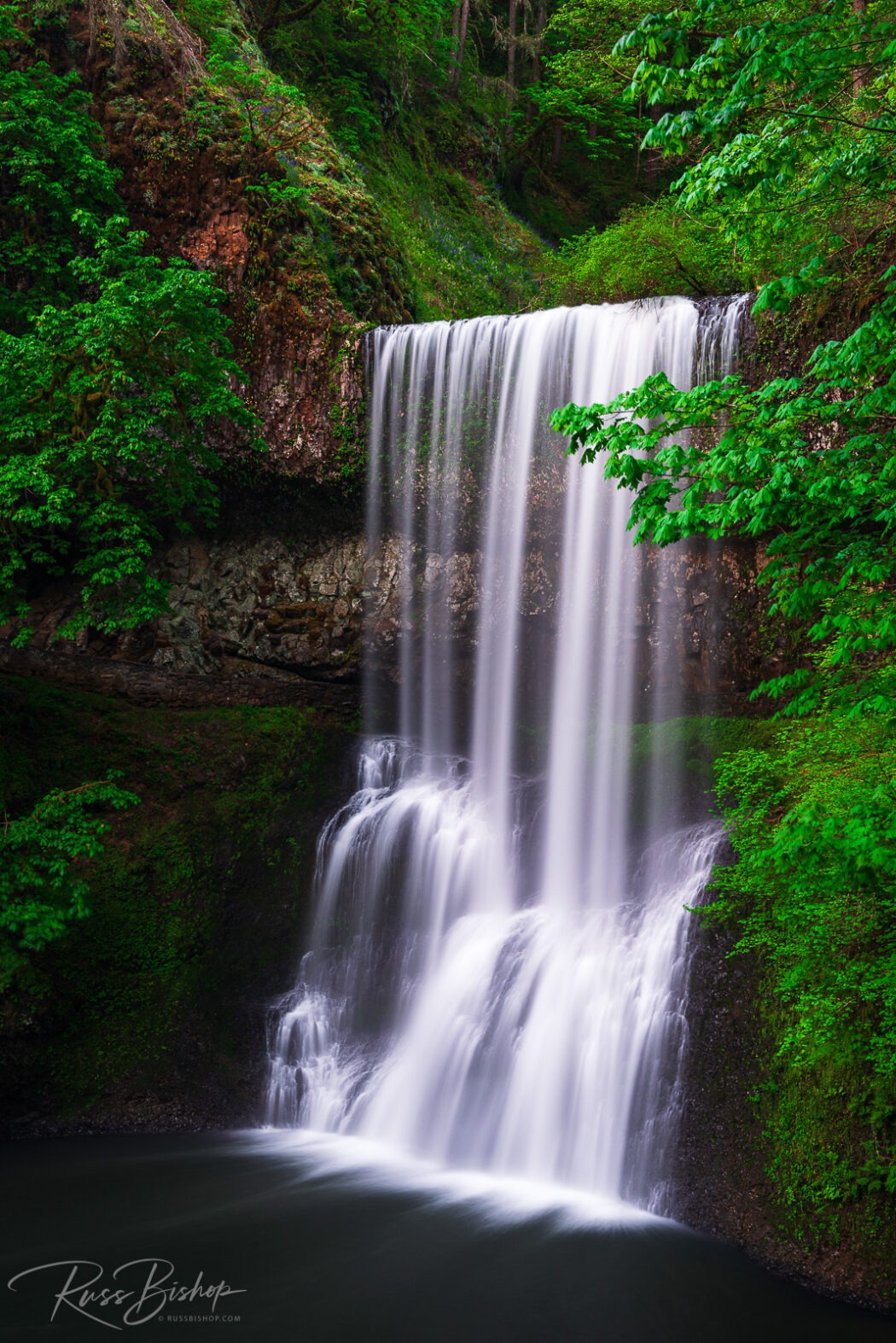
Lower South Falls, Silver Falls State Park, Oregon

Oregon is well-known for its lovely waterfalls and lush green surroundings so typical of the Pacific Northwest. The Columbia River Gorge includes some of the finest and most recognizable cascades in the world making this an idyllic spot for hiking and photography.

But its proximity to the city of Portland and the interstate highway make this a popular destination that’s certainly no secret. On my last visit a new bride was having her wedding pictures taken under Multnomah Falls complete with stylist and catering!

So if getting off the beaten path is more to your liking, then check out some of the other parts of the state that offer great opportunities to experience the beauty and solitude of falling waters in a pristine setting without the crowds.

Silver Falls State Park east of Salem is one such gem that includes several beautiful falls in a remote valley. It is the largest state park in Oregon with over 9,000 acres, and its 24 miles of trails allow plenty of opportunity for quiet contemplation, exploring, and photography. Lower South Falls shown here is a highlight of the park and one of four cascades where the trail is carved into the cliff behind providing a unique view. 

Other destinations such as Proxy Falls in Willamette National Forest and the Rogue River Scenic Byway in southern Oregon are well-worth the diversion off the major highways. As with many locations in the west, a sense of adventure and a willingness to leave the pavement will allow you to experience much more of the wilder side of Oregon.


©Russ Bishop/All Rights Reserved
Light and Fast – Tips for Dynamic Adventure Photography

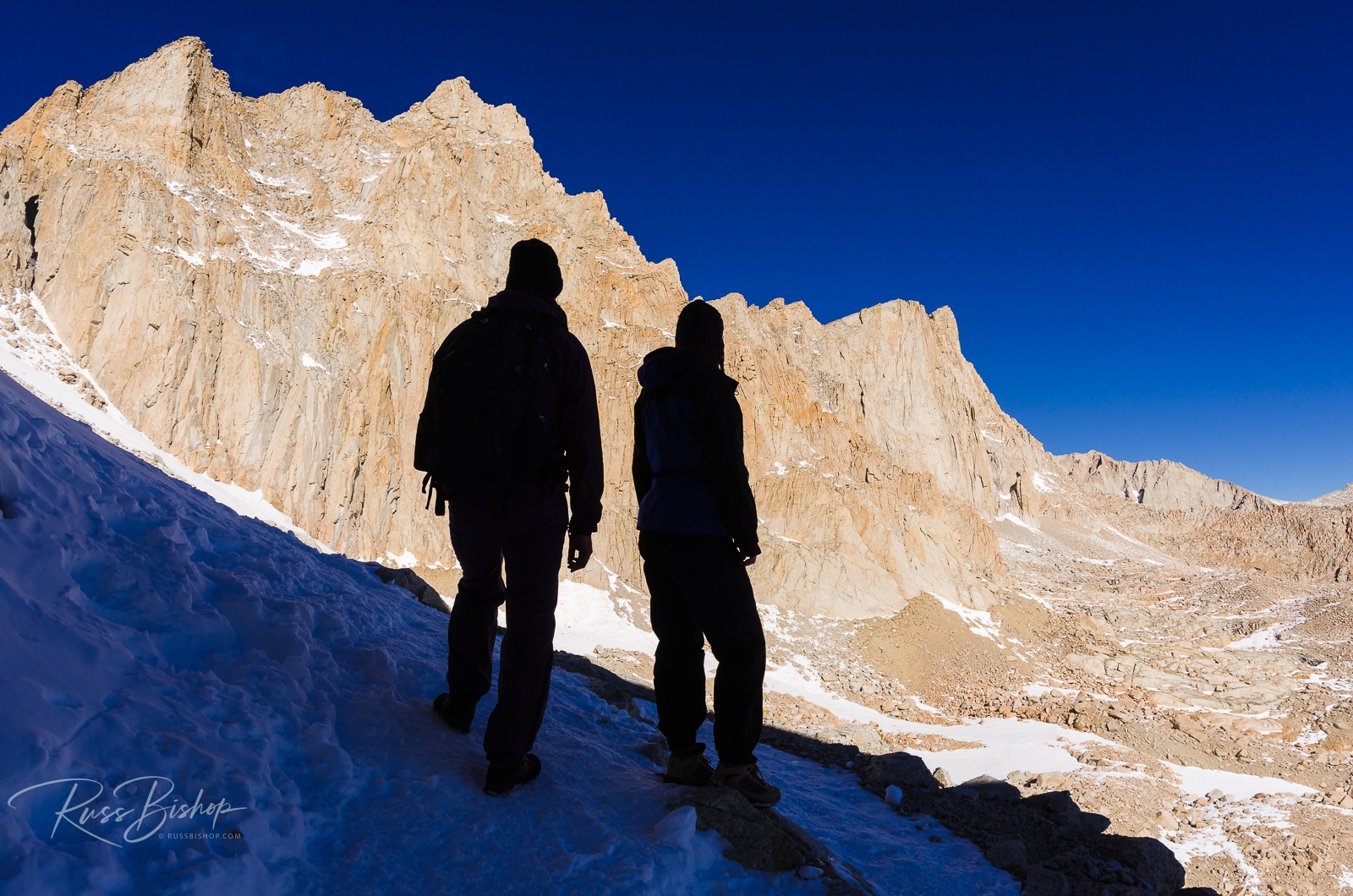
Light and Fast - Tips for Dynamic Adventure Photography. Hikers on the Mount Whitney trail, John Muir Wilderness, Sierra Nevada Mountains, California
Hikers on the Mount Whitney trail, John Muir Wilderness, California

Light and Fast – Tips for Dynamic Adventure Photography. As with many outdoor photographers, the late Galen Rowell was a big influence in my life and early in my career I adopted his mantra of “light and fast” when photographing in the wilderness. His advice still works as well in today’s digital world as it did in the days of film, and I’m sure he would have embraced the realm of pixels and megabytes.

When shooting adventure images, either on the trail or the side of a mountain, I still use the same techniques I did 25 years ago when my camera of choice was a lightweight Nikon FM2 loaded with Velvia and matched with my favorite 24mm f2.8 lens. Although the F3 was my workhorse when shooting fine art landscapes back then (just as my D850 is today), these bodies are overkill for action shots when weight and efficiency are prime considerations in getting the shot.

Today my D7200 has replaced my FM2 with its perfect balance of weight and function (even the batteries are the same as my D850!). And my tiny Nikkor 16mm f2.8 is the ideal complement to that body, with its DX crop revealing an image almost identical to my favorite 24mm. Both of these lenses are extremely sharp even handheld, and offer amazing depth of field for those in-your-face action shots. Most importantly, this setup is so small and light I don’t even know it’s there when skiing, trekking or climbing.

It’s been said many times that vision is more important than gear when making captivating images, and this is especially true when you leave the pavement. Using the available light and following the action is paramount when the conditions are rapidly changing, and the last thing you want is for your equipment to slow you down just when the images are starting to materialize.

Another often overlooked element is physical conditioning. As a photographer you might not be making all the hard moves that you’re trying to document in your subjects, but you often need to travel lightly and move quickly over rough terrain just to keep up – all while staying one step ahead of the oxygen-depleted air at higher altitudes!

Adventure photography is a fast paced form of visual storytelling that should leave your audience feeling like they are part of the action. But as any seasoned wilderness traveler will tell you, the key to success is to stay fit, pack smart, and travel light. Remember Galen’s rule and make sure your equipment is as transparent as possible. It’ll allow you to live in the moment – and that’s where the great images are found.


©Russ Bishop/All Rights Reserved

Kauai’s Kalalau Trail

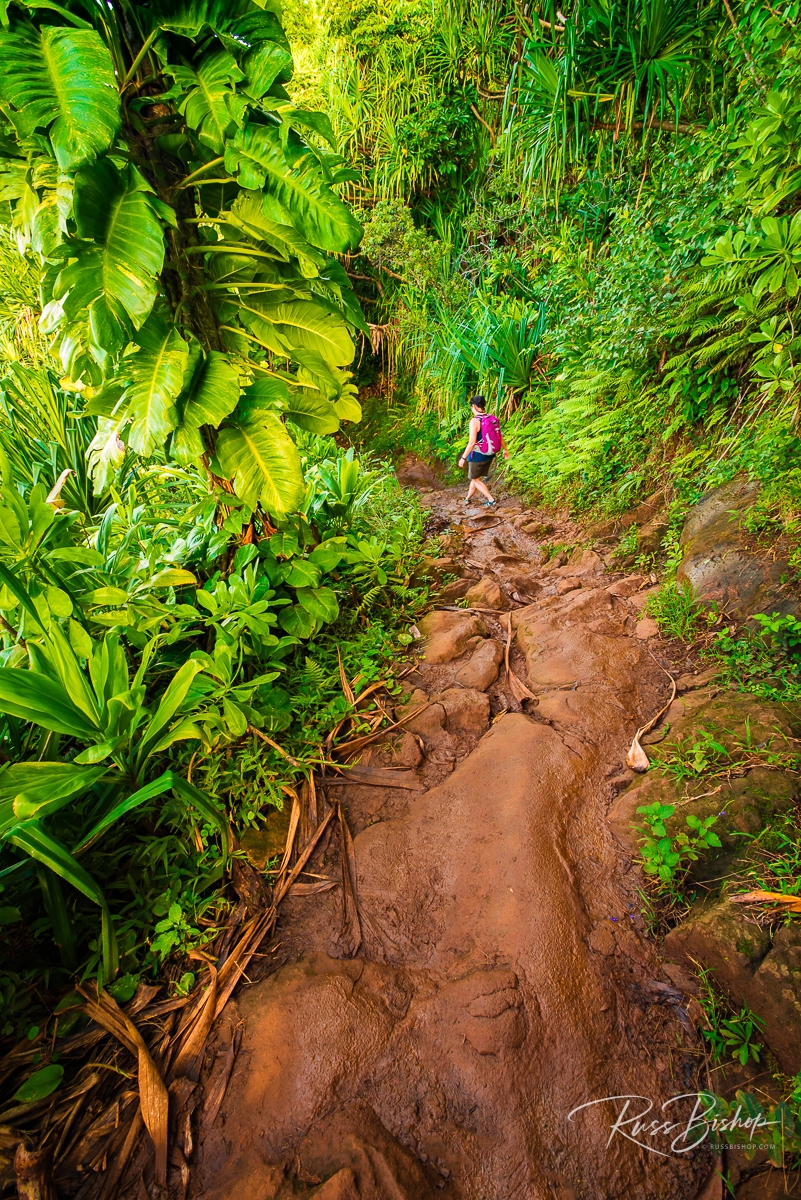
Kauai's Kalalau Trail. Lush vegetation along the Kalalau Trail, Na Pali Coast, Kauai, Hawaii 
Lush vegetation along the Kalalau Trail, Napali Coast Wilderness State Park, Kauai, Hawaii

The Kalalau Trail along Kauai’s verdant north shore is arguably one of the finest hikes in the world. Originally built in the late 1800’s to link early Hawaiian settlements along the rugged coastline, it is still the only land access to this remote part of the Island.

The trail, which starts at the end of the road at Ke’e Beach, hugs the sheer cliffs along Napali Coast Wilderness State Park and traverses 5 valleys before ending at Kalalau Beach where the pali (Hawaiian for cliffs) create a natural terminus.

Along this mystical journey you pass verdant spires, wander through lush valleys, and are left with the feeling that you’ve truly entered the Lost World (not surprising since both King Kong and Jurassic Park were filmed here).

Whether you cover the entire 11 mile distance and camp at Kalalau Beach or take an afternoon hike to Hanakapi’ai Beach to sample the dense jungle and golden afternoon light, this is the quintessential Na Pali Coast experience.


©Russ Bishop/All Rights Reserved