Chasing Waterfalls

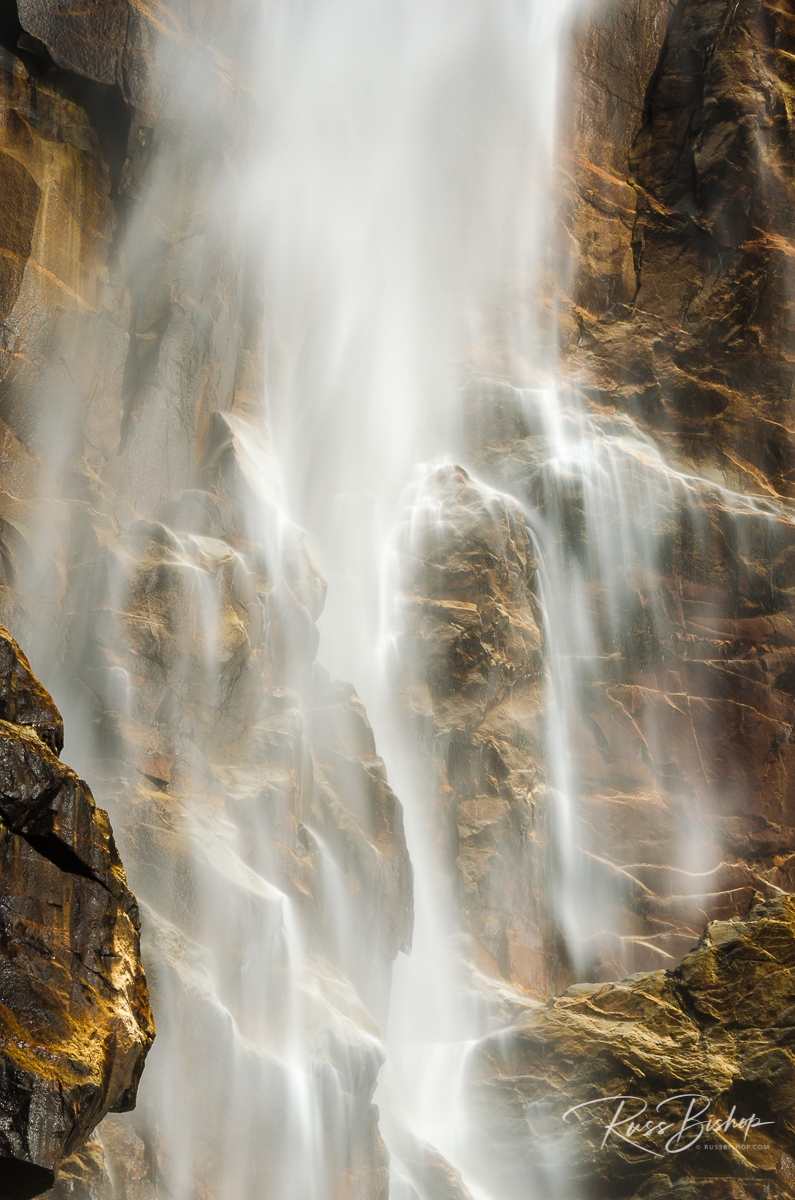
Chasing Waterfalls. Detail of Bridalveil Fall, Yosemite Valley, Yosemite National Park, California
Detail of Bridalveil Fall, Yosemite Valley, Yosemite National Park, California

Chasing Waterfalls. There’s something about flowing water that soothes the soul and sparks the imagination. Mesmerizing ripples on a lake, the fluid dynamics of an eddy as it dances over rocks in a stream, or the powerful force of a cascading waterfall. It’s poetry in motion – nature’s visual elixir.

Preserving these moments of natural movement on film or sensor is a tireless indulgence for the outdoor photographer. Varying shutter speeds and focal lengths can create dramatic landscapes or freeze intimate moments of light and form. And most impressive is the fact that no two images will ever be the same!

Learning to read the flow of the water becomes intuitive with experience and helps solidify the visual appeal of each frame. Waterfalls in particular are constantly changing their course as the wind shifts, and timing your exposure for the best flow can greatly reduce editing time when reviewing dozens of images.

As with all nature photography, time spent thoughtfully viewing a scene and carefully framing your composition is paramount. It will ensure that when the decisive moments arrive you’re able to capture the dancing waters at peak performance.


©Russ Bishop/All Rights Reserved

Finding Balance

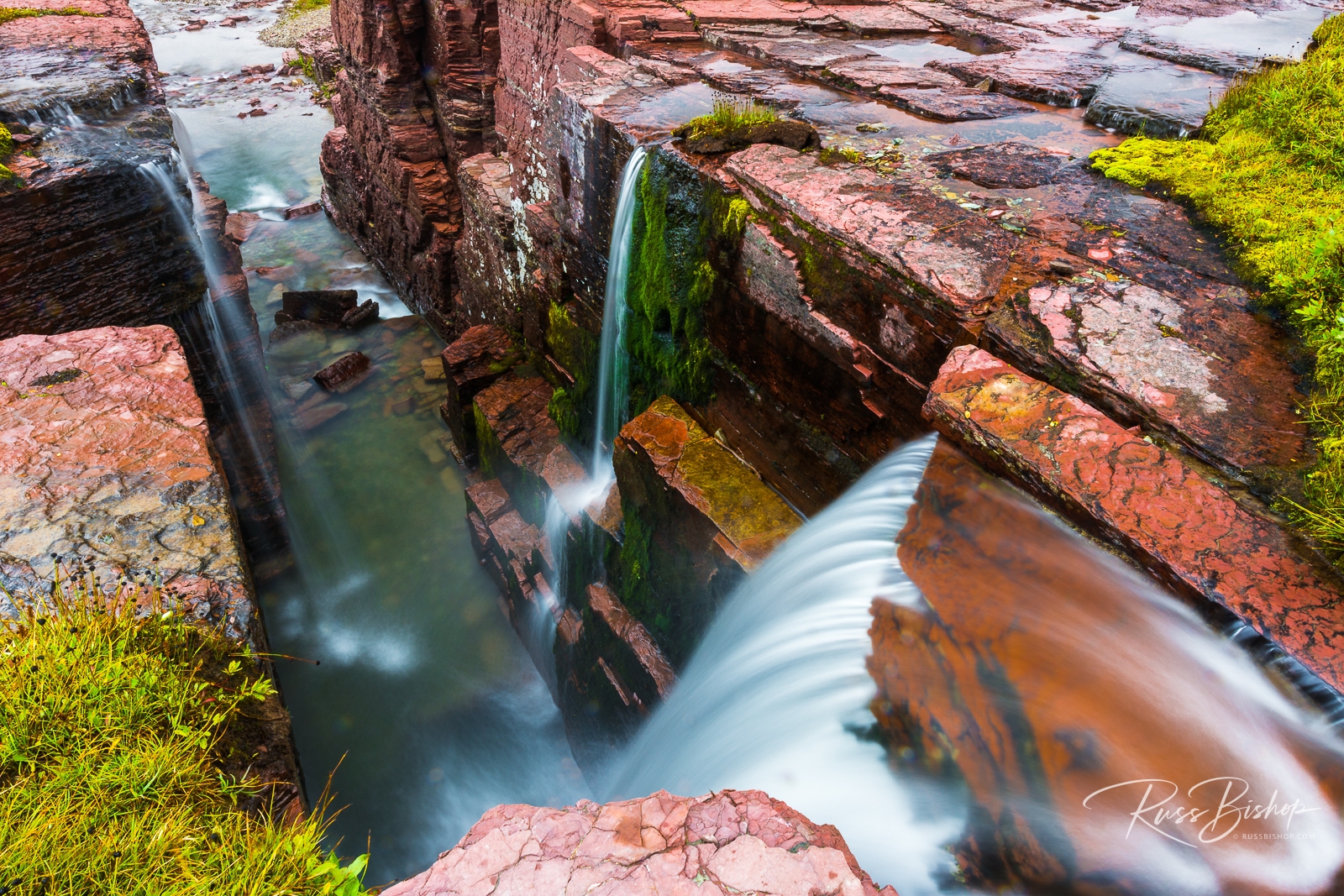
Finding Balance. Triple Falls, Glacier National Park, Montana
Triple Falls, Glacier National Park, Montana

Finding balance. The notion of coming together to create symmetry spans the worlds of economics, mathematics, computing, and natural science. Systems that work together to form a more unified whole are greater than the sum of their parts. They are efficient and economical, and equally important on the human side they create a sense of harmony and well-being.

It is a natural human desire to find equilibrium in our lives, and for many the definition of success is living a balanced life. Landscape photography is a wonderful medium in this sense as it provides us with an outlet for creating visual harmony. What we express through our lens is an extension of our personality and our vision of the world around us.

Webster defines balance as “an aesthetically pleasing integration of elements” and, while the evolution of our photographic vision is an ongoing journey, learning to find balance in your compositions does become second nature with practice.

The juxtaposition of color and form within the frame is often the key, and learning to recognize and integrate them into your photography will translate into more dynamic and satisfying images that hopefully reflect that balance we all strive to find in life.


©Russ Bishop/All Rights Reserved

The Forest For The Trees

The Forest For The Trees. Giant Sequoia in winter, Giant Forest, Sequoia National Park, California
Giant Sequoia in winter, Giant Forest, Sequoia National Park, California

In today’s modern world of fast-paced digital photography it’s easy to feel overwhelmed by the constant stream of new technology. Cameras, software and accessories are released at an alarming rate, and it’s easy to get caught up in the race to stay ahead of the curve. But it’s important to remember that first and foremost we are artists, and that technology serves the art and not the other way around. Don’t lose sight of the forest for the trees.

You can be sure Rembrandt didn’t lust over the latest brushes or Ansel Adams the latest developer or papers whenever their interpretation of light and shadow faced a challenge. Instead, they trusted their familiar tools even more to allow their hand and eye (the only lasting tools of the trade) to record the scene faithfully.

When you do upgrade your equipment (and we all do at some point) you owe it to yourself to thoroughly understand its features and functions. No one likes reading manuals, but it’s time well spent that you’ll appreciate the next time the light is fleeting and you’re focused on capturing the moment, not fumbling with dials or menu settings.

So purchase when you must, but don’t lose sight of the big picture. Put your energy into developing your vision and spend less time worrying about the march of progress. Art is about the seeing and no one will ever look at your images and say “that was made with a Nikon or Canon”. More likely, they will say “what was s/he feeling”!

The more comfortable you are with your equipment the more it becomes an extension of your mind’s eye and allows you the freedom to truly see the world around you. And that’s when your vision outshines all the other tools in your bag.


©Russ Bishop/All Rights Reserved