Visual Drama through Leading Lines

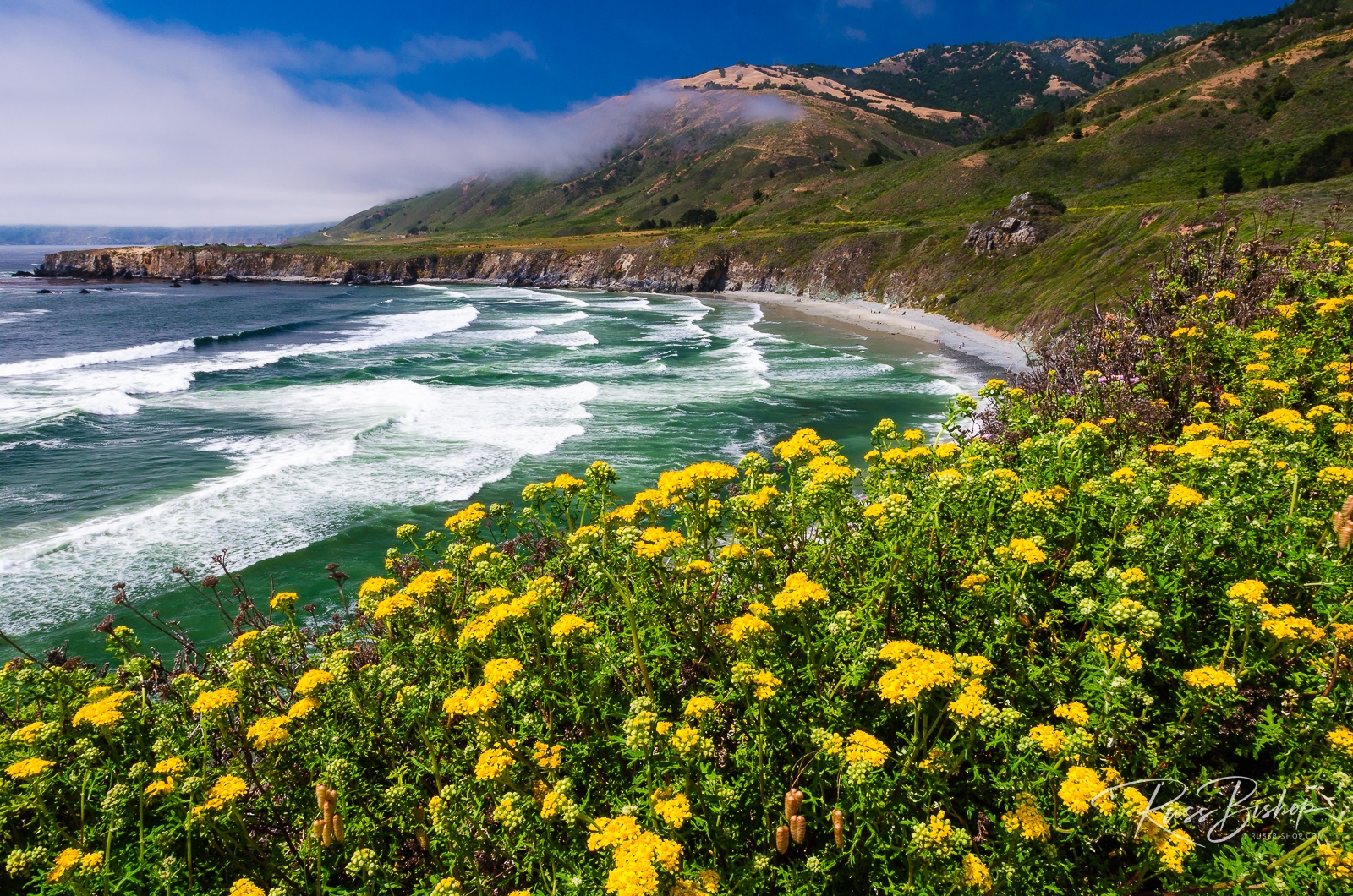
Visual Drama through Leading Lines. Wildflowers above Sand Dollar Beach, Los Padres National Forest, Big Sur, California
Wildflowers above Sand Dollar Beach, Los Padres National Forest, Big Sur, California

There are many ways to create stronger compositions in landscape photography, but one of the easiest and most effective techniques is the use of leading lines. Dynamic lighting and great subject matter are the desired cornerstones of any great composition, but even when these elements are less than exceptional there is still a way to create an emotional connection with your audience. Draw them into the scene with leading lines.

The wide-angle lens (anything 24mm and wider) has numerous benefits for the landscape photographer from incredible depth of field and relatively small size to a viewing angle that really captures the big picture. But all that visual information can be a bit overwhelming without some direction.

Using the rule of thirds and carefully composing to include natural lines such as a shoreline, forest edge, stream, or mountain ridge can lead your viewers into the frame or guide them to a specific part of the image. Diagonal lines in particular create visual tension, which is a sure-fire way to add drama to your images and create an emotional response with your audience.

Next time you’re out photographing the landscape, take a moment before you trip the shutter to make sure the elements within the frame are being used to their best advantage. Think of yourself as a director guiding your audience rather than just a photographer documenting the scene and you’ll be rewarded with stronger, more exciting images.


©Russ Bishop/All Rights Reserved
Yosemite Moonbows

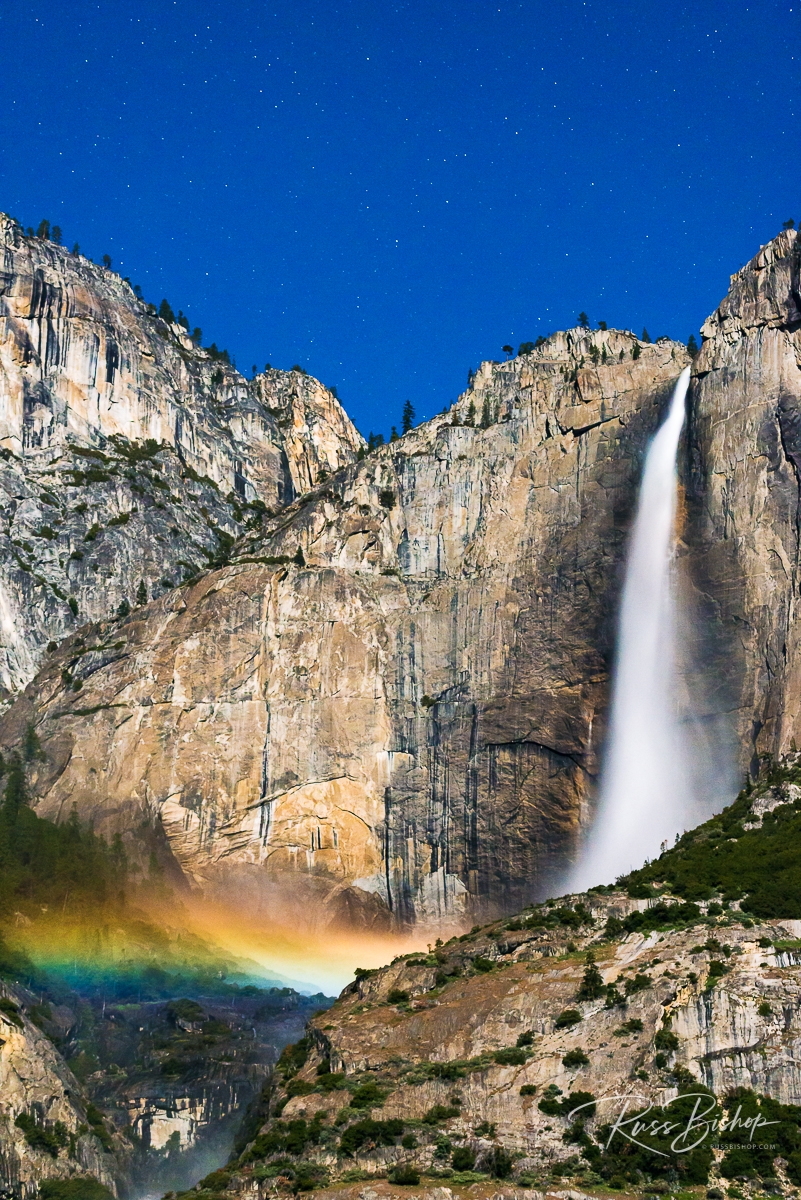
Yosemite Moonbows. Moonbow and starry sky over Yosemite Falls, Yosemite National Park, California
Moonbow and starry sky over Yosemite Falls, Yosemite National Park, California

Yosemite Moonbows. Yosemite National Park is a mecca for adventure and nature photography with its steep granite walls, lush meadows, alpine spires and booming waterfalls. I’ve spent four decades exploring its unique features and it always feels like home whenever I return.

But as with any well-loved location, it’s easy to find yourself in a creative quandary when it comes to seeking out new perspectives. With iconic landmarks around every turn, it’s a challenge to create fresh images that (no matter how beautiful) don’t leave you feeling as if you’ve just seen that same view in a recent car ad or magazine. So what to do?

As I’ve mentioned in a previous post, waterfalls are always a rewarding subject as no two shots will ever be the same. The flow of the water is in a constant state of flux and experimenting with shutter speed opens up a whole new world of creative expression. From what Ansel Adams called “straight photography” to ethereal artistic interpretation, the sky really is the limit with this liquid landscape.

Also known as lunar rainbows, moonbows are a unique phenomenon that occurs when the full moon illuminates the spray of a waterfall. The moon needs to be low in the sky (less than 42 degrees) and the night sky must be very dark making Yosemite an ideal location. The best times are typically 2 to 3 hours before sunrise or 2 to 3 hours after sunset when the brightness of the stars compliments the moonlight reflecting off the water.

Framing can be a challenge in such dim light, but once you have a composition set and your eyes have adjusted the fun part begins. Watching the moonbow magically appear and disappear with the ebb and flow of the spray is mesmerizing and makes for an evening of photography you won’t soon forget.


©Russ Bishop/All Rights Reserved

Big Sur Classic

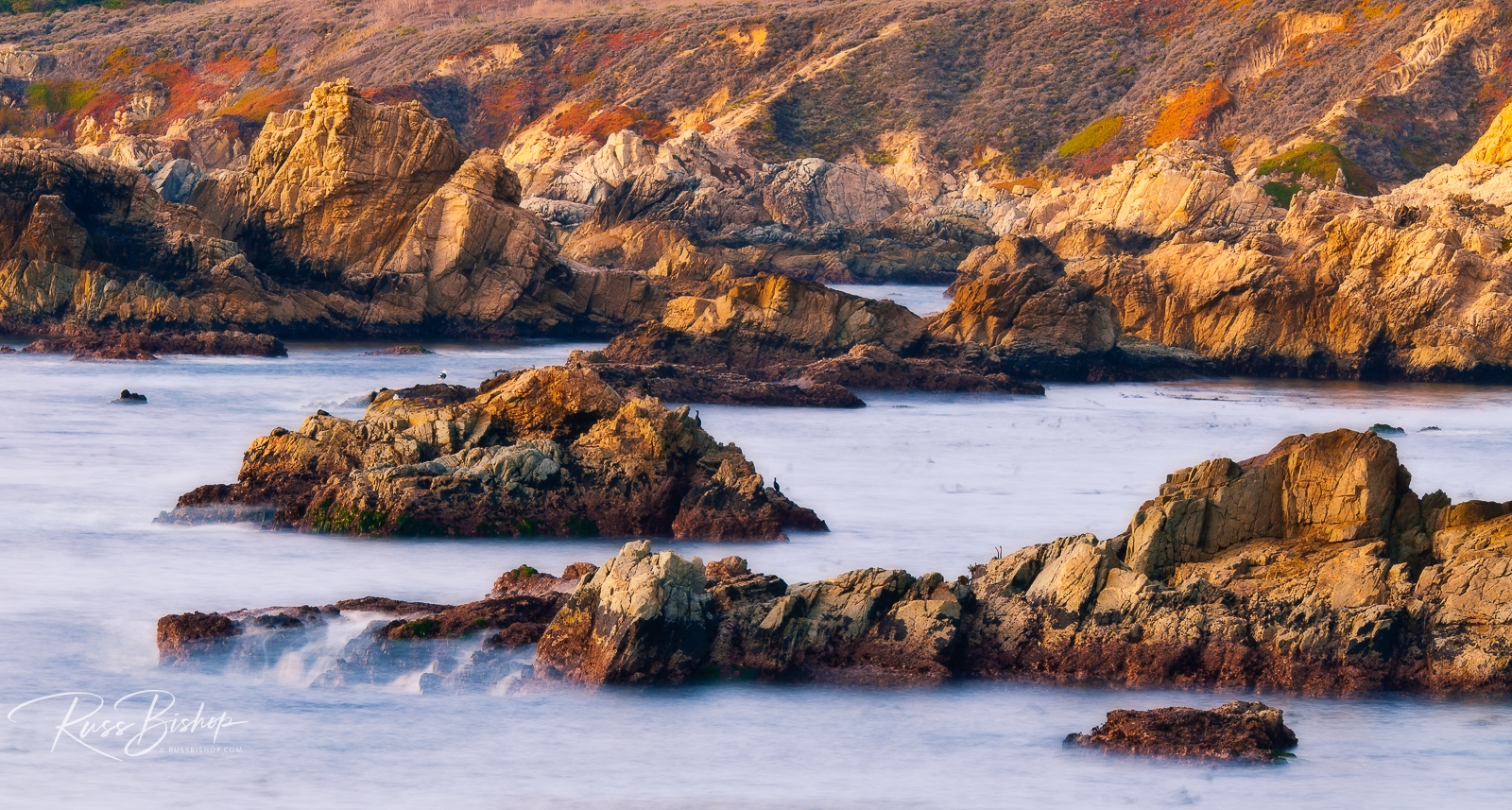
Big Sur Classic. Rocky coastline at Soberanes Point, Garrapata State Park, Big Sur, California
Rocky coastline at Soberanes Point, Garrapata State Park, Big Sur, California

The Big Sur coast is one of those truly special locations that never fails to impress. The rocky shoreline and misty mountains are instantly recognizable the world over, yet her mood is constantly changing throughout the seasons providing a fresh perspective with each new visit.

From the early morning fog to the golden sunsets, this meeting of land and sea is in a constant state of flux. And as you make your way along that magical ribbon known as Highway 1, each turn reveals a slightly different scene that somehow seems more dramatic than the last.

For photographers, this perpetual change is ideal and the challenge of making fresh images (common in many other popular landmarks) is all but removed. The Big Sur coast is also part of the Monterey Bay National Marine Sanctuary, and its rich sea life, including Elephant Seals, otters. and migrating gray whales, provides yet another opportunity for great imagery and unparalleled wildlife viewing .


©Russ Bishop/All Rights Reserved