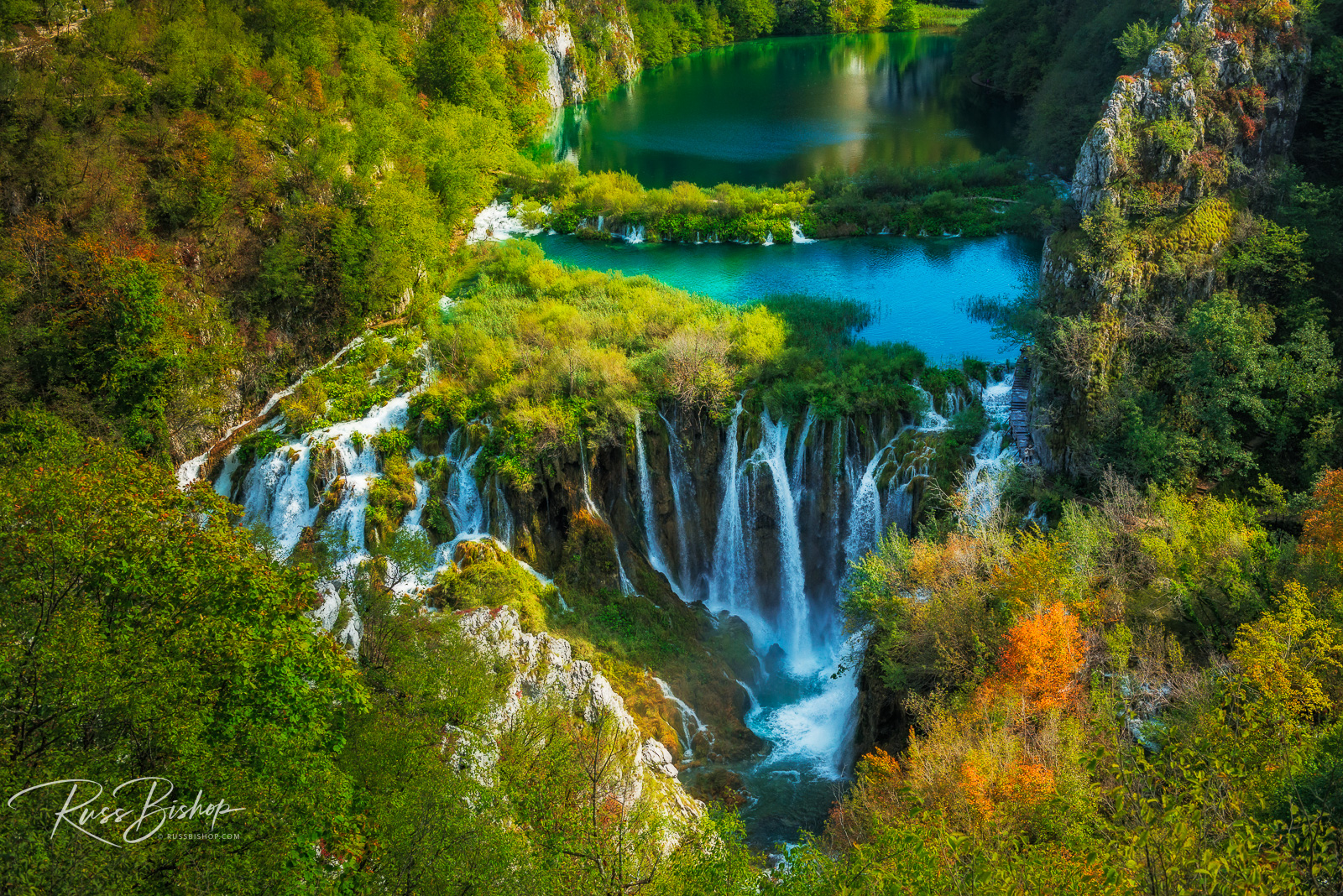
Travertine cascades on the Korana River, Plitvice Lakes National Park, Croatia
The mesmerizing waterfalls at Plitvice Lakes National Park are renowned for their unique colors, ranging from azure to green and blue. The waters are fed from underground Karst formations, and the colors change constantly throughout the day depending on the quantity of minerals and organisms in the water and the angle of sunlight.
Delicate travertine dams separate the 16 lakes that are visible on the surface, creating a unique ecosystem between each body of water. Formed as plants and bacteria in the water interact with the air, these barriers grow at a rate of 1 centimeter a year and continue to shape and form the myriad cascades the park is famous for.
Established in 1949, Plitvice Lakes is one of the oldest national parks in Europe and was designated a UNESCO World Heritage Site in 1979. Croatia is a beautiful country with a rich and colorful past, and as one of the newest members of the European Union its friendly atmosphere and gorgeous scenery make this an ideal addition to any European adventure.
Hiker on the Bishop Pass trail in Dusy Basin, Kings Canyon National Park, California
Don’t Leave Home Without It ~ When planning a photo shoot many items are obvious and not likely to be left behind such camera bodies, tripods, or a favorite bag. But there’s a reason surgeons and pilots use a checklist before every flight or operation. Even though they have performed these tasks a hundred times, the possibility of forgetting one important item is not acceptable.
Granted photography is not quite as extreme, but we can still benefit from this time-worn ritual. A checklist will alleviate much of the anxiety both when you’re packing, and when you’re far from home and realize you’re missing an important piece of gear.
Every trip is unique. Duration, location and expectations will determine whether specialized gear or extra food and clothing is required, but even the short trips close to home can benefit from good preparation.
Here’s a simple list of action items that should be included on any photo trip:
Do your homework – create a visual idea file of images to develop a sense of place for where you are traveling and images you hope to make. Google Earth can be a huge help in determining landforms and cityscapes alike, and with the Photographer’s Ephemeris you’ll know exactly when the sun will set and where the moon will rise.
Gear List – Make a list of personal gear and camera gear you feel you’ll need for your destination. For extended trips, start these lists at least a month prior to your travel to allow time to modify. Check the online forums for recommendations from those who have been to the location. Often less is more when trying to travel light.
Rentals – If you’re planning to rent a piece of gear, be sure to reserve it well in advance to allow plenty of time for availability and shipping.
Location List – Create a checklist of locations you plan to visit and subjects you’d like to photograph. You won’t make it to all of them, but having options will allow flexibility when the weather or other obstacles alter your plans.
Batteries & Memory – Make sure you have batteries, chargers and memory cards for the specific camera bodies you’ll be taking. Portable solar panels are great for extended backcountry trips, and 12 volt inverters are perfect when working from a car.
Card Reader – Memory card readers for the cards you’re taking are much quicker than downloading directly from the camera. Especially on longer trips when evening social time and sleep are often at a premium!
Software – Make sure your laptop or tablet has the software or apps you plan to use and that they are up to date.
Camera Manuals – Download the PDF instruction manuals for your camera bodies to your phone or tablet. No one likes to read manuals, but knowing what the error code is when you’re miles from home can be a real asset.
Camera Cleaning – Clean all lens elements and filters prior to leaving, and pack a sensor cleaning kit. Dust is the bane of digital photography and it will find its way onto your sensor every time you change lenses.
Repairs – Pack a small photo repair kit, including jeweler’s screwdrivers, pliers, tweezers, and super glue.
Quick Release – QR plates and L-brackets are a real time-saver in the field, but are specific for each camera body. Make sure to bring the correct ones.
Weather Report – Check the weather for the location of your destination both for comfort and alerts. Services like Weather Underground have great apps for phone and tablet with highly detailed forecasts.
Clothing – Pack clothing items such as gloves, a jacket and shoes or boots that are appropriate for the destination. The layering system including a base layer, insulating layer, and waterproof shell has been the standard for mountain travellers for years, but it will serve you well anywhere.
Nutrition and Hydration – Take a water bottle and energy bars (even if you only plan to be out for the afternoon). A water filter is a great option to save on weight if you’ll be near a water source.
First Aid – Always carry a small emergency first aid kit.
Obviously this list will vary depending on the location and duration of your trip, but it’s a good starting point for any photographic outing. There will always be surprises and setbacks, but as the saying goes, “Luck favors the prepared!”.
The confidence of knowing that you’ll be comfortable, and that your gear will be up to the task, will enable you to focus your energy on creativity and the photographic opportunities that present themselves.
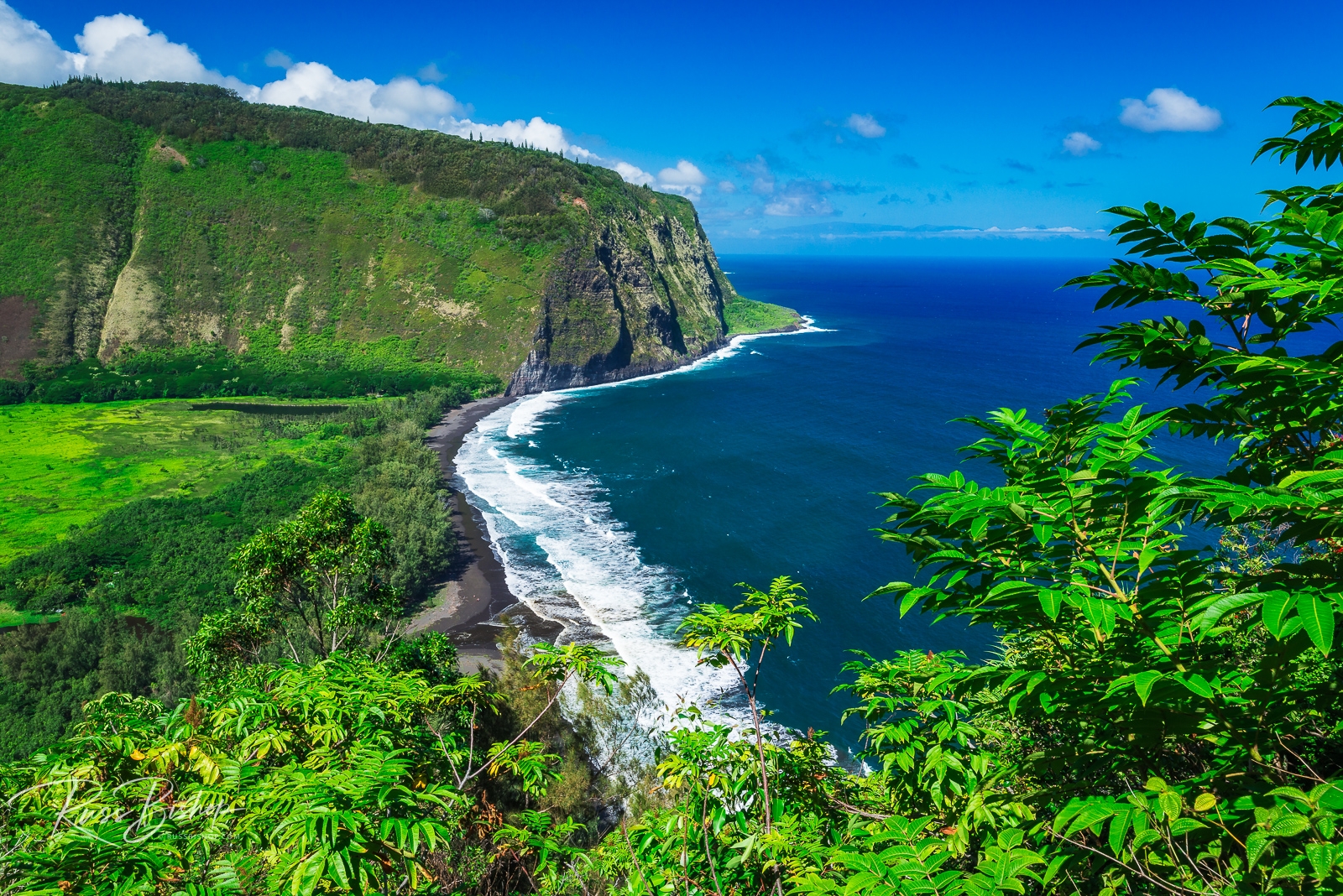
Waipi’o Valley, Hamakua Coast, The Big Island, Hawaii
Tucked away on the remote Hamakua Coast of The Big Island, Hawaii’s Valley of the Kings preserves the essence of ancient Hawaii. From its black sand beach, dramatic cliffs, and waterfalls to the scattering of taro farms that have worked this land for generations, this idyllic valley is a wonderful place to explore and photograph.
The overlook at the end of Highway 240 provides sweeping views of the valley below, but the adventurous traveler will want to experience this verdant valley up close. The excitement starts as you leave the overlook and descend the 25% grade, taxing both engines and muscles alike. This paved public road, which is only open to 4-wheel drive vehicles and foot traffic, is the steepest road of its length in the United States and possibly the world.
Waipiʻo means “curved water” in the Hawaiian language and aptly describes the lazy river that greets you at the bottom. Wild horses can often be seen wandering along its banks, and this is a good spot to bring a kayak and explore upstream. Heading towards the Pacific the road ends at the beach and a primitive picnic area, but you can cross the river when the water is low and experience your own piece of paradise a la Robinson Crusoe. The black sand beach to the west is usually deserted and the occasional washed up fishing float or Hawaiian offering amid the coconut palms provide a truly remote feeling.
It’s easy to see why this was a favorite spot of the ancient Hawaiian royalty, and you might remember it as the final scene in Kevin Costner’s sci-fi epic Waterworld. When it’s time to leave, your only regret is that first glimpse of the road back to reality.