Fall Color Photography – Where’s The Light?

Fresh snow on fall aspens and pines, Inyo National Forest, California USA

Fall Color Photography – Where’s The Light? Successful fall color photography obviously starts with planning around the seasonal changing of the leaves (and this Fall Color Map can help), but once you’ve scouted your location there’s another key factor to consider.

Where and how the color happens is dependent upon elevation and temperature and no two years are ever the same. The higher mountains of the west begin in mid-September, eastern hardwoods in October, and the lower red-rock country of the southwest typically in early November. Once you’ve settled on a destination and found that great grove of trees the next step is to understand the light.

It might seem like the vibrant reds or yellows before you would be faithfully reproduced by your sensor no matter what time of day, but understanding the quality of the light can go along way towards guaranteeing your success. Using backlight or sidelight when the sun is low on the horizon and illuminates the leaves from behind creates a wonderful warm glow, especially when set against a dark background.

Softlight is another great light source (illustrated above) that occurs when the sky is overcast and acts like a giant studio softbox. Under these conditions, it doesn’t matter what time of day you’re shooting as the shadows are eliminated and the uniform light both reduces the contrast while intensifying the colors.

So when the scene presents itself, consider the light and framing, and don’t be too quick to trip the shutter. A slight change in position or a little patience can often make the difference between a good image and a great one.


©Russ Bishop/All Rights Reserved

Simplify, Simplify

Simplify, Simplify. Afternoon haze over the Sierra Nevada foothills from Moro Rock, Sequoia National Park, California
Afternoon haze over the Sierra Nevada foothills, Sequoia National Park, California

Simplify, Simplify. Thoreau’s famous words apply as much to successful landscape photography as life itself. Often when we first approach a classic scene we’re inclined to capture as much of it as possible in hopes that nothing is left out.

Many times a wide-angle view is the best perspective for those grand vistas, but it needs to be carefully composed in order to guide the viewer’s eye through the frame. Problems arise when there is too much information and the image becomes cluttered and confusing. That’s the time to go long and distill the key elements down to their essence.

As with taking on too much in our lives and missing the forest for the trees, sometimes we need to simplify the scene to make it stronger. By carefully cropping out distracting elements and focusing on light and form we can create images with  more visual impact that connect with our audience on a deeper level.


©Russ Bishop/All Rights Reserved

Visual Drama through Leading Lines

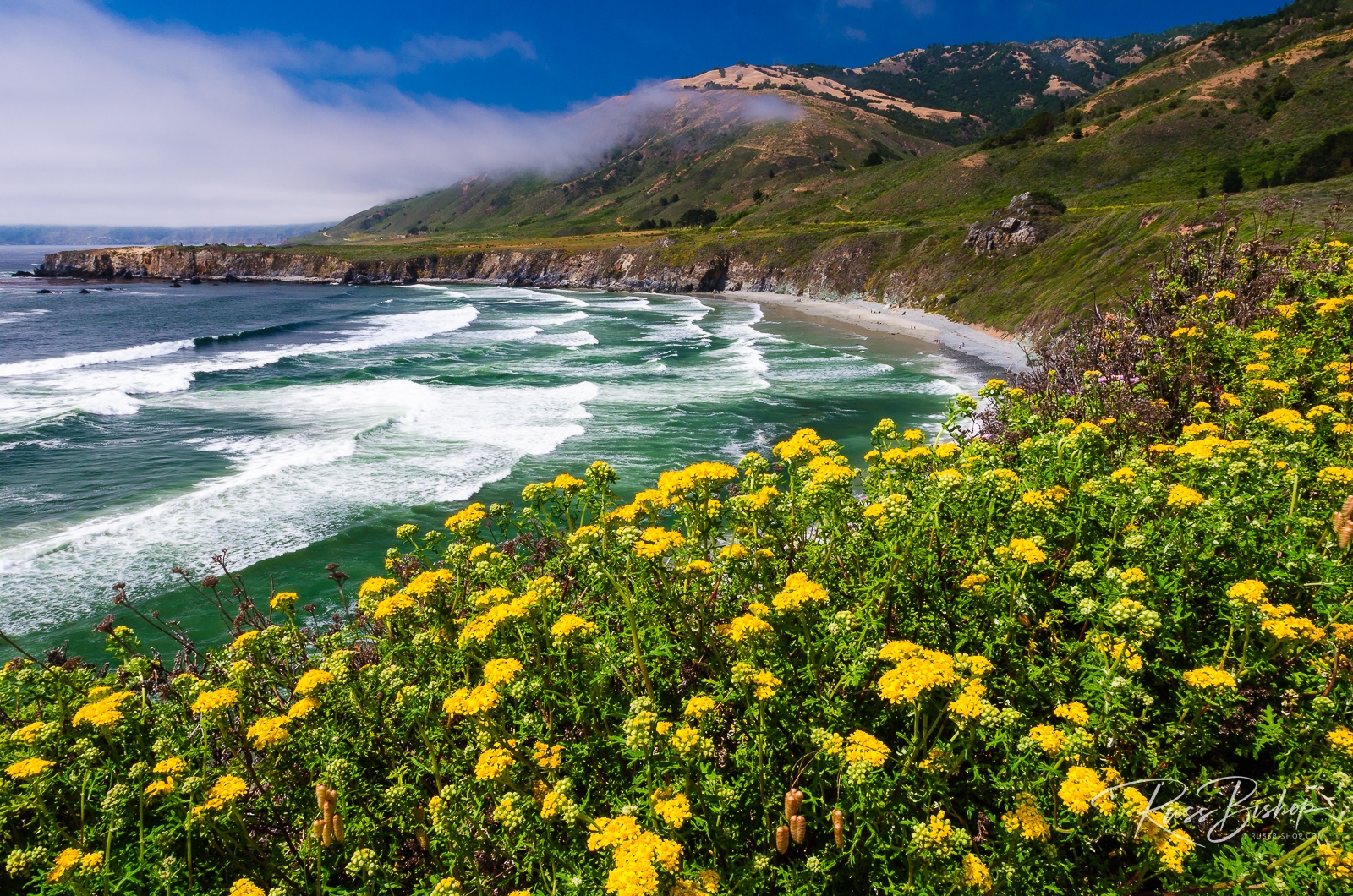
Visual Drama through Leading Lines. Wildflowers above Sand Dollar Beach, Los Padres National Forest, Big Sur, California
Wildflowers above Sand Dollar Beach, Los Padres National Forest, Big Sur, California

There are many ways to create stronger compositions in landscape photography, but one of the easiest and most effective techniques is the use of leading lines. Dynamic lighting and great subject matter are the desired cornerstones of any great composition, but even when these elements are less than exceptional there is still a way to create an emotional connection with your audience. Draw them into the scene with leading lines.

The wide-angle lens (anything 24mm and wider) has numerous benefits for the landscape photographer from incredible depth of field and relatively small size to a viewing angle that really captures the big picture. But all that visual information can be a bit overwhelming without some direction.

Using the rule of thirds and carefully composing to include natural lines such as a shoreline, forest edge, stream, or mountain ridge can lead your viewers into the frame or guide them to a specific part of the image. Diagonal lines in particular create visual tension, which is a sure-fire way to add drama to your images and create an emotional response with your audience.

Next time you’re out photographing the landscape, take a moment before you trip the shutter to make sure the elements within the frame are being used to their best advantage. Think of yourself as a director guiding your audience rather than just a photographer documenting the scene and you’ll be rewarded with stronger, more exciting images.


©Russ Bishop/All Rights Reserved