What You See Is What You Get

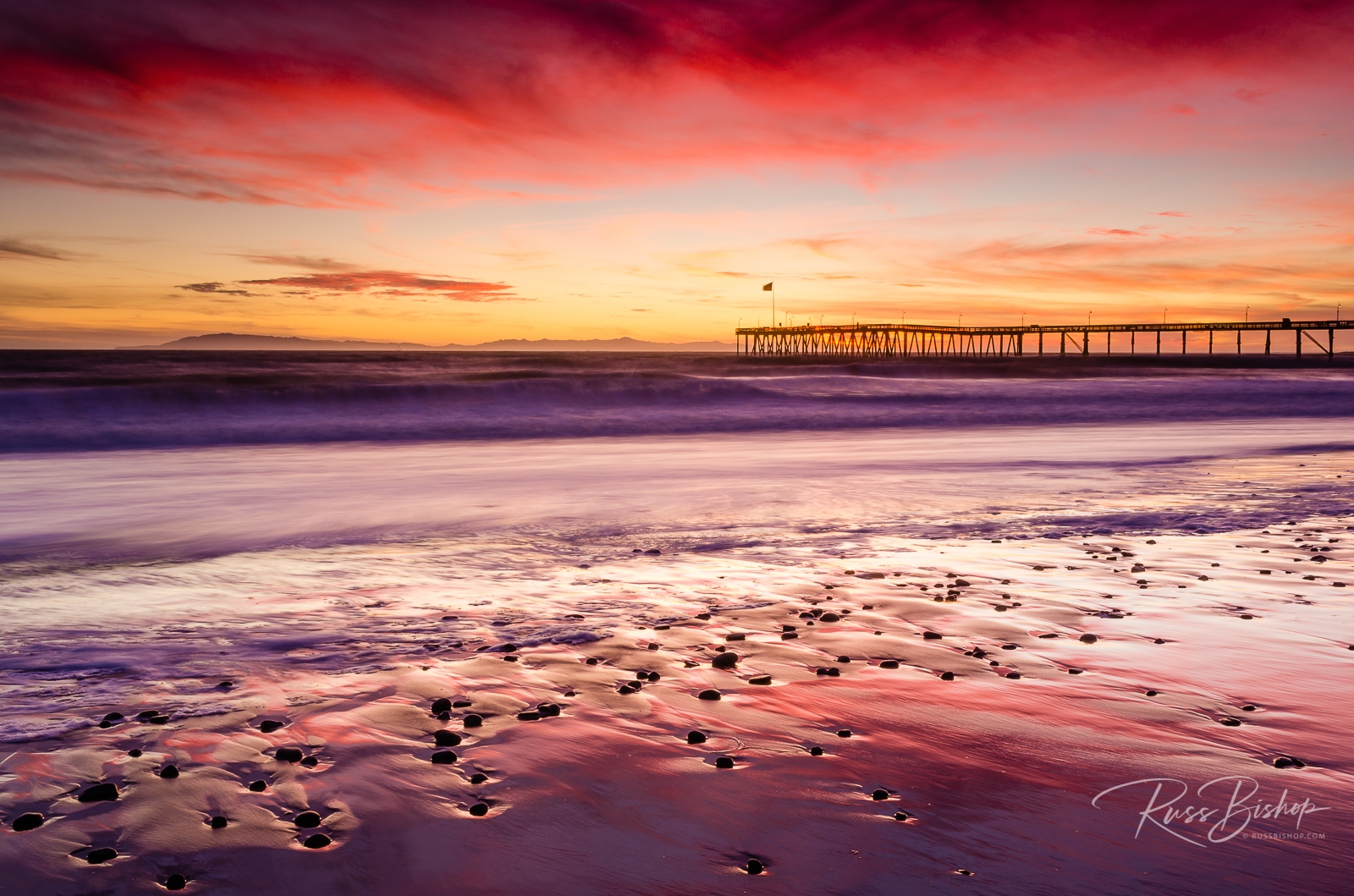
What You See Is What You Get ~ Sunset over the Channel Islands and Ventura Pier from San Buenaventura State Beach, Ventura, California
Sunset over the Channel Islands and Ventura Pier, Ventura, California

WYSIWYG (or “what you see is what you get”) is computer lingo for software that optimizes the screen display for a particular type of output. Back when word processing and desktop publishing software first hit the scene this was nothing short of a miracle. The software emulated the resolution of the printer in order to get as close as possible to WYSIWYG, but the main attraction was the ability to previsualize what you were producing prior to printing.

We now live in a far more advanced digital world of 4K monitors, massive image files, and the processors and video cards to handle them, but without color consistency across devices we might as well be living in the dark ages.

Monitor calibration has a reputation as being one of the great mysteries of digital imaging, but it really doesn’t have to be. Printing images that accurately represent what you see on-screen is a reasonable expectation that shouldn’t break the bank on wasted ink and paper. But unlike the out-of-box WYSIWYG experience you get when printing documents, your monitor requires a little assistance when it comes to images.

What you need is a spyder, and I’m not referring to those furry creatures lurking in your garage. Several companies sell highly accurate and reasonably priced kits like the Datacolor Spyder that include everything you need to guarantee that your output is consistent from screen to print. The spyder is actually a color sensor (called a colorimeter) that plugs into a standard USB port and works in tandem with software to read your monitor’s output. The process is known as calibration and it creates a custom profile that tunes your display to an industry reference standard, which is then used by image editing programs like Photoshop and Lightroom to provide consistent reliable color.

You trust your eyes and photo equipment when it comes to accurately representing your vision in the field, but it’s all for naught if your monitor doesn’t faithfully reproduce those tones and colors. Much like driving in the dark with your headlights off, editing images without a calibrated monitor is a guessing game.

So before you buy another lens or camera body, don’t overlook one of the most important investments you can make as a digital photographer. A quality monitor and calibration kit may not be the most exciting gear you’ll buy, but they do guarantee that what you see is what you get.


©Russ Bishop/All Rights Reserved

Happy Birthday Ansel Adams

Happy Birthday Ansel Adams. Yosemite Valley from Tunnel View, Yosemite National Park, California
Yosemite Valley from Tunnel View, Yosemite National Park, California

Happy birthday Ansel Adams! The master of landscape photography, who was born February 20, 1902, had a profound affect on my creative direction and continues to be an inspiration to generations of outdoor photographers.

Adams pioneered the idea of previsualization, the concept of seeing the final image in the mind’s eye before the photo is created. He also co-founded Group f/64 with other photographic masters Edward Weston and Imogen Cunningham, and he developed the Zone System, a technique for translating perceived light into specific densities to allow better control over finished photographs. Though he lived well before the time of megapixels and monitors I think he would have embraced the creative possibilities of the digital age.

As a strong advocate for the environment, his iconic black and white images of the American West influenced powerful decision makers in Washington and helped preserve places like Yosemite and Kings Canyon National Parks and California’s iconic Big Sur coast. Ansel was also largely responsible for photography being accepted into the world of fine art, culminating in major exhibitions at the Metropolitan Museum of Art.

He was awarded the Presidential Medal of Freedom, the nation’s highest civilian honor, in 1980. And shortly after his death in 1984, the Minarets Wilderness in his beloved Sierra Nevada Mountains was re-named the Ansel Adams Wilderness in his honor.

Thank you Ansel – your legacy lives on!

“Photography is more than a medium for factual communication of ideas. It is a creative art.”   ~ Ansel Adams


©Russ Bishop/All Rights Reserved

The Power of Negative Space

The Power of Negative Space. Clearing winter storm over Teewinot Mountain, Grand Teton National Park, Wyoming
Clearing winter storm over Teewinot Mountain, Grand Teton National Park, Wyoming

The Power of Negative Space. Successful landscape photography is often comprised of several elements coming together in harmonious balance within the frame. This can be quite complex or deceptively simple. Spatial relationships and color are the building blocks used to balance most compositions, and careful lens selection is essential in distilling an image down to its essence.

But sometimes less is more and an effective use of negative space can be a great tool to elicit an equally powerful response. This basic, but often overlooked principle of design, gives the eye a place to rest and increases the appeal of a composition through subtle means. The Japanese word ma is a perfect example. Roughly translated to “the space between two structural parts”, it is best described as a consciousness of place – the simultaneous awareness of form and non-form deriving from an intensification of vision.

The image above was made as a late winter storm was moving out of the Teton Range. By using a medium telephoto and focusing on the predominant white space I was able to isolate the spires and ridges to give the illusion that the mountains were floating in the clouds.

With the right conditions, adding negative space to your visual toolkit can be a simple yet powerful way to create strong images that resonate with your viewers.


©Russ Bishop/All Rights Reserved