Yosemite Moonbows

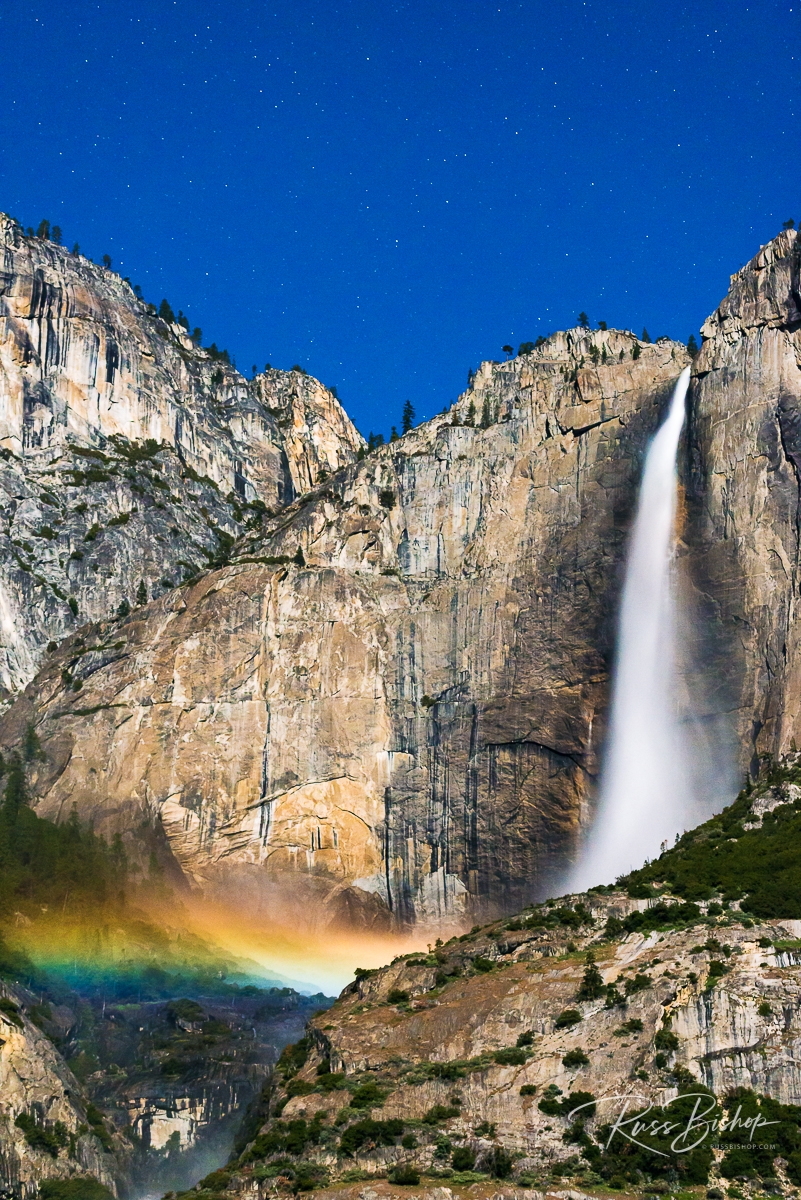
Yosemite Moonbows. Moonbow and starry sky over Yosemite Falls, Yosemite National Park, California
Moonbow and starry sky over Yosemite Falls, Yosemite National Park, California

Yosemite Moonbows. Yosemite National Park is a mecca for adventure and nature photography with its steep granite walls, lush meadows, alpine spires and booming waterfalls. I’ve spent four decades exploring its unique features and it always feels like home whenever I return.

But as with any well-loved location, it’s easy to find yourself in a creative quandary when it comes to seeking out new perspectives. With iconic landmarks around every turn, it’s a challenge to create fresh images that (no matter how beautiful) don’t leave you feeling as if you’ve just seen that same view in a recent car ad or magazine. So what to do?

As I’ve mentioned in a previous post, waterfalls are always a rewarding subject as no two shots will ever be the same. The flow of the water is in a constant state of flux and experimenting with shutter speed opens up a whole new world of creative expression. From what Ansel Adams called “straight photography” to ethereal artistic interpretation, the sky really is the limit with this liquid landscape.

Also known as lunar rainbows, moonbows are a unique phenomenon that occurs when the full moon illuminates the spray of a waterfall. The moon needs to be low in the sky (less than 42 degrees) and the night sky must be very dark making Yosemite an ideal location. The best times are typically 2 to 3 hours before sunrise or 2 to 3 hours after sunset when the brightness of the stars compliments the moonlight reflecting off the water.

Framing can be a challenge in such dim light, but once you have a composition set and your eyes have adjusted the fun part begins. Watching the moonbow magically appear and disappear with the ebb and flow of the spray is mesmerizing and makes for an evening of photography you won’t soon forget.


©Russ Bishop/All Rights Reserved

Go With The Flow

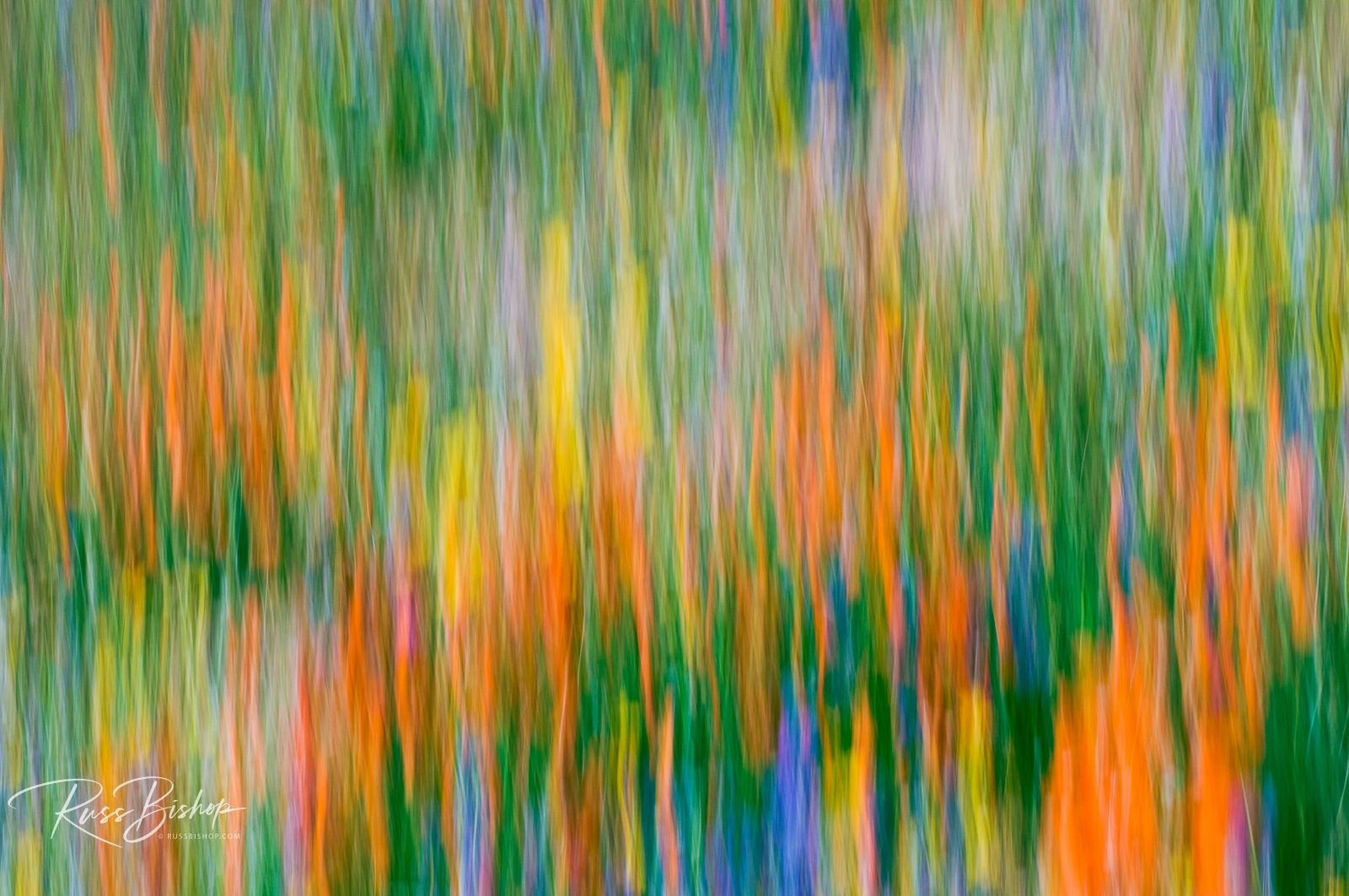
Go With The Flow. Wildflower abstract, Tehachapi Mountains, Angeles National Forest, California
Wildflower abstract, Tehachapi Mountains, Angeles National Forest, California

Previsualization is an often used term in landscape photography – the process of researching a location, determining perspective through lens selection and framing, and forming a solid image in your mind’s eye before ever arriving at a scene or tripping the shutter.  Ansel Adams referred to it often as “the ability to anticipate a finished image before making the exposure”, and it was a favorite expression of other luminaries such as Minor White and Edward Weston.

There is a lot to be said for this approach and it’s certainly the route I take whenever possible. If all goes according to plan, you do your homework, arrive at the predetermined location, setup the shot, then wait for the ideal light and the image falls into place. This technique works quite well much of the time (assuming you’ve done that homework), but there are those moments when mother nature simply won’t cooperate. The golden light has been replaced with drab overcast, the wind is determined to keep every leaf or flower in motion, or the road has been closed by an avalanche and you can’t even get to the desired location. Fear not, it’s happened to everyone.

This is the time to give in and go with the flow. There are still great images to be made, but now you need to throw out those mental notes and let that right brain have a little fun. When the flowers and leaves are blowing make abstracts. If the light is anything but exciting, avoid the sky and look for the soft even lighting illuminating the ground cover. And even if that avalanche has closed the road, this is the perfect time to take a detour and explore someplace you’ve never seen before.

So the next time that great image you’ve envisioned isn’t working out as planned, try an alternate approach and go with the flow.  You might find your masterpiece was there all along just waiting to be discovered.


©Russ Bishop/All Rights Reserved

Big Sur Classic

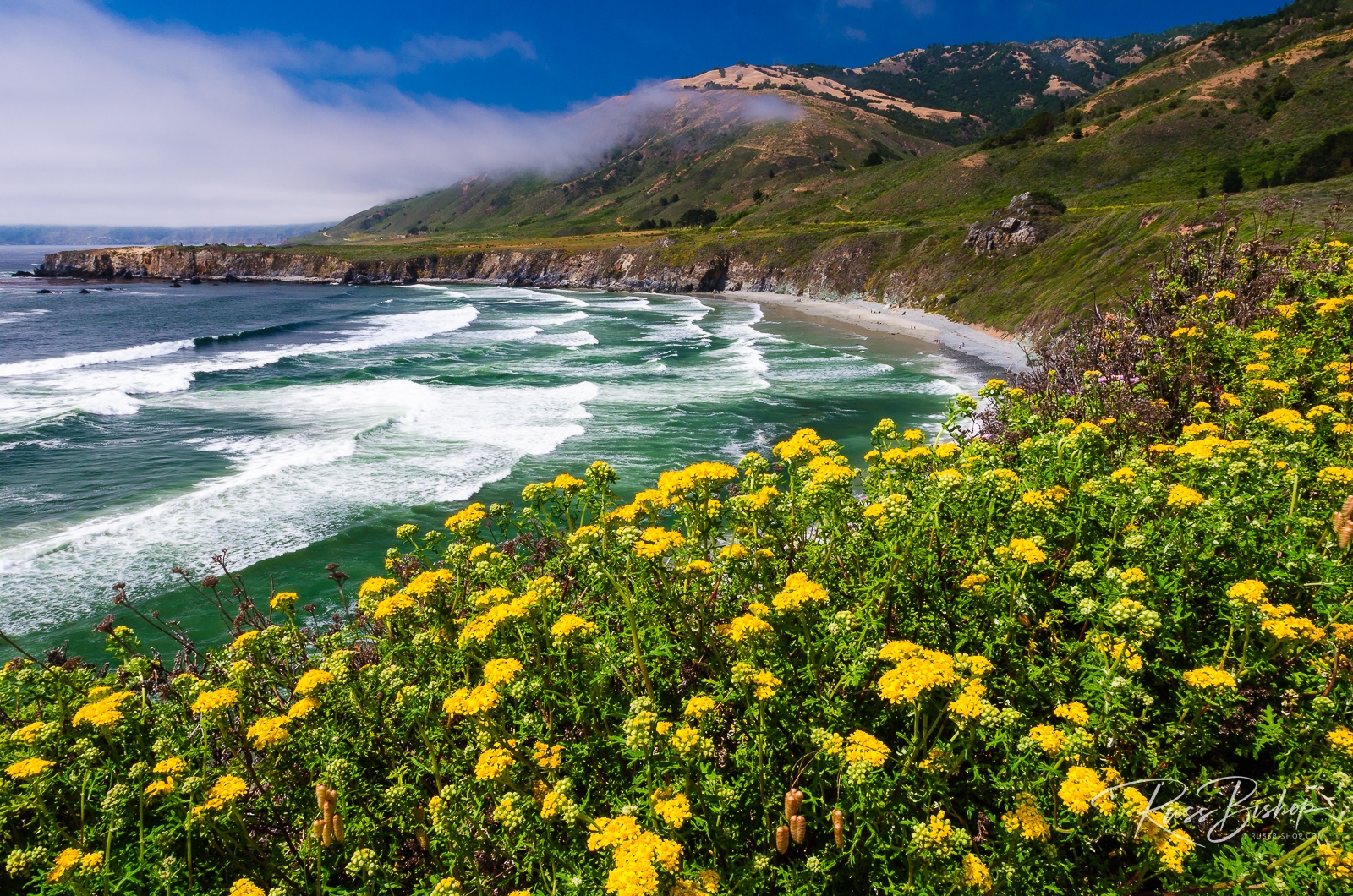
Big Sur Classic. Rocky coastline at Soberanes Point, Garrapata State Park, Big Sur, California
Rocky coastline at Soberanes Point, Garrapata State Park, Big Sur, California

The Big Sur coast is one of those truly special locations that never fails to impress. The rocky shoreline and misty mountains are instantly recognizable the world over, yet her mood is constantly changing throughout the seasons providing a fresh perspective with each new visit.

From the early morning fog to the golden sunsets, this meeting of land and sea is in a constant state of flux. And as you make your way along that magical ribbon known as Highway 1, each turn reveals a slightly different scene that somehow seems more dramatic than the last.

For photographers, this perpetual change is ideal and the challenge of making fresh images (common in many other popular landmarks) is all but removed. The Big Sur coast is also part of the Monterey Bay National Marine Sanctuary, and its rich sea life, including Elephant Seals, otters. and migrating gray whales, provides yet another opportunity for great imagery and unparalleled wildlife viewing .


©Russ Bishop/All Rights Reserved