
Government Shutdown Alternatives

Cypress Tree at sunset, Point Lobos State Reserve, Carmel, California

It’s unfortunate that this week our government here in the US has closed its doors, especially for those who had travel plans to visit our wonderful national parks. But all is not lost as there are many beautiful locations in state parks, wilderness, and BLM (Bureau of Land Management) areas around the country that are open and often free of charge.

In California, a few of the standouts include Anza-Borrego Desert State Park (the largest in California and second largest in the country). Northeast of San Diego, this sprawling wilderness park offers endless hiking and photographic potential in a remote setting of cactus covered hillsides and palm oasis. With Borrego Springs as your base, you can enjoy day hikes from numerous lodging options in town, or wilderness camp for free under a star-filled sky and not see a soul for days.

Point Lobos State Reserve near Monterey, Garrapata and Limekiln State Parks (all on the Big Sur Coast), provide some of the best views on the California coast. Limekiln includes coastal access and camping and trails through a primeval forest of old growth redwoods and crystal clear streams. Garrapata is a rugged, undeveloped park adjacent to Highway 1 offering quiet coves, sea arches, and stunning views of the Pacific.

Further north, Point Lobos State Reserve, which was a local haunt of Ansel Adams and Edward Weston, is part of the Monterey Bay National Marine Sanctuary. It’s wind-swept shores of rare Monterey cypress are a diver’s paradise and a great place to watch migrating whales and sea otters – and the sunsets can be truly spectacular. Other excellent spots in the area include Julia Pfeiffer Burns State Park, and Sand Dollar Beach in the Los Padres National Forest. On the east side of the state along Highway 395 in the Sierra Nevada Mountains, the Alabama Hills under Mount Whitney are a vast moon-scape of giant boulders and arches made famous in early Hollywood movies and a wonderful photographic destination.

So while the politicians in Washington try to see eye to eye, those who had planned to visit America’s best idea don’t have to feel short-changed. There’s still plenty of natural beauty waiting to be explored outside the confines of the National Park System.

©Russ Bishop/All Rights Reserved
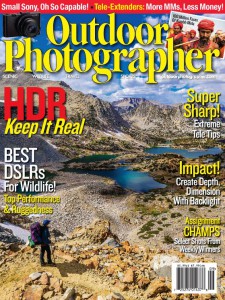
Outdoor Photographer September 2013 Cover

OP September 2013 Cover

I’m excited to share my September 2013 cover of Outdoor Photographer Magazine!

The eastern Sierra Nevada Mountains of California are my backyard playground as many of you know. With an amazing variety of rugged peaks, alpine meadows and gorgeous light, they offer endless opportunity for photography and those with an adventurous spirit.

Here, my wife Maureen, is enjoying the view of the pristine lakes below Bishop Pass on our way to Dusy Basin. It’s honestly hard to say which side of the pass is more spectacular! In case you missed it – check out my recent profile piece in OP here.

©Russ Bishop/All Rights Reserved

The Louvre Museum


Louvre Palace and Pyramid at night, Louvre Museum, Paris, France

Paris is known the world over as The City of Light and rightfully so. When the sun goes down on La Ville-Lumière, the classic monuments and cobblestone boulevards of this vibrant city take on an entirely new appearance.

Many may not realize that its name first referred to its fame as a centre of education and ideas during the Age of Enlightenment, and later to its early adoption of street lighting. During the second half of the 19th century Emperor Napoleon III transformed Paris into a modern city, tearing down entire sections dating back to the Middle Ages, and opening large avenues which let light into the former mediaeval city.

The Louvre Museum is a showpiece not only of some of the world’s finest art, but of Paris after dark. With more than 8 million visitors each year it is the world’s most visited museum, and houses nearly 35,000 objects from prehistory to the 21st century.

Built in the 12th century, the Louvre has been transformed through the ages from a fortress, to a royal palace, an artist’s residence, and finally to its present role as a bastion of the art world. It’s modern glass pyramid, created in 1989 by architect I. M. Pei, is a fascinating design that bridges the gap from the old world to the new. And the golden glow from its reflecting pools is enough to make the Mona Lisa smile.

©Russ Bishop/All Rights Reserved